
The 12 Best Tools for Competitor Analysis in 2025
Staying ahead in the restaurant equipment industry isn't just about having the best products; it's about understanding the digital landscape. Your competitors are constantly adjusting their SEO, ad spend, and content strategies. Without the right intelligence, you're navigating blind. This guide dives deep into the best tools for competitor analysis, moving beyond generic feature lists to provide actionable insights specifically for your niche.
We'll explore how restaurant equipment sellers can leverage these platforms to uncover rival strategies, identify market gaps, and ultimately drive more qualified traffic. This curated list details the exact software that helps you see what's working for others, so you can refine your own marketing and sales approach. To truly unlock your competitive edge with these tools, it’s essential to integrate them within a comprehensive competitor analysis framework that structures your data collection and analysis.
This resource is designed to be your go-to reference. Each tool review includes:
- Key Use Cases: How to apply it specifically to the food service equipment market.
- Pros and Cons: An honest assessment of strengths and limitations.
- Pricing Insights: A clear overview of what to expect financially.
Whether you're a seasoned marketer or just starting, this guide will equip you with the resources needed to turn competitor data into a powerful growth engine. We've included direct links and screenshots for each platform to help you make an informed decision quickly and get started.
1. Semrush
Semrush is a comprehensive, all-in-one digital marketing suite that provides an unparalleled depth of competitive intelligence. It's often considered one of the best tools for competitor analysis because it consolidates data across SEO, paid advertising, content marketing, and social media into a single, cohesive dashboard. For a restaurant equipment seller, this means you can uncover a rival’s entire digital strategy, from the exact keywords they rank for to the ad copy they use on Google.
The platform excels at revealing actionable insights. For example, using the Organic Research tool, you can see which commercial keywords (like "commercial convection oven") drive the most traffic to your competitors. You can then use this data to inform your own SEO and content strategy. The Advertising Research tool is equally powerful, allowing you to view historical ad spend and performance, helping you budget more effectively for your own campaigns.
Key Features & Use Case
-
Organic & Advertising Research: Identify your top organic and paid competitors. A practical use case is to input a competitor’s domain, like
competitor-equipment-supply.com, and instantly see a list of their most profitable keywords and top-performing ads. - Market & Traffic Intelligence: Benchmark your website's traffic against competitors, analyze their audience demographics, and understand which channels (e.g., direct, referral, social) send them the most visitors.
- Social Media Tracker: Monitor competitors' social media performance, engagement rates, and audience growth to refine your own social strategy.
Pricing & Limitations
Semrush operates on a subscription model, starting at around $129.95/month for the Pro plan. While its extensive dataset is a major advantage, the cost can be a significant investment, and pricing increases with add-ons like the Traffic Analytics API or additional user seats. For businesses with very limited needs, the platform might feel like overkill. However, for serious growth, the ROI is often justified. You can find detailed guidance on leveraging these features in our guide to SEO competitor analysis for your business.
2. Similarweb
Similarweb is a powerful digital intelligence platform that excels at providing a high-level overview of any website's traffic and engagement. While Semrush dives deep into keyword-level data, Similarweb offers a broader perspective on market share and digital footprint, making it one of the best tools for competitor analysis when it comes to benchmarking. For a restaurant equipment seller, it’s perfect for quickly sizing up a competitor's overall reach, identifying their primary traffic sources, and understanding their audience demographics without getting lost in granular SEO details.
The platform's strength lies in its intuitive dashboard that visualizes competitive data clearly. You can compare your website's performance side-by-side with rivals, discovering which marketing channels (like direct, organic search, or paid social) are most effective for them. For instance, if you see a competitor gets significant traffic from referral sites you've never heard of, you've just uncovered a potential new partnership or advertising opportunity for your own business.
Key Features & Use Case
-
Traffic & Engagement Metrics: Analyze total visits, bounce rate, pages per visit, and average visit duration to benchmark your site against the competition. A practical use case is to compare your
yourequipmentsite.comagainst a market leader to see how your user engagement stacks up. - Marketing Channel Breakdown: See the percentage of traffic a competitor gets from each channel (e.g., email, social, search). This helps you identify underserved channels in your own strategy.
- Audience Demographics & Top Pages: Understand a competitor’s audience geography and interests, and see which of their product or content pages are the most popular.
Pricing & Limitations
Similarweb offers various plans, including self-serve packages suitable for smaller teams, with pricing available upon inquiry. While it provides a free trial, its core strength in broad traffic analysis comes with limitations; deeper data like extended history and granular country-level filtering are often reserved for higher-priced enterprise tiers. The platform's traffic data is also an estimate, so it should be used for strategic direction rather than exact reporting. More information is available at https://www.similarweb.com/.
3. Ahrefs
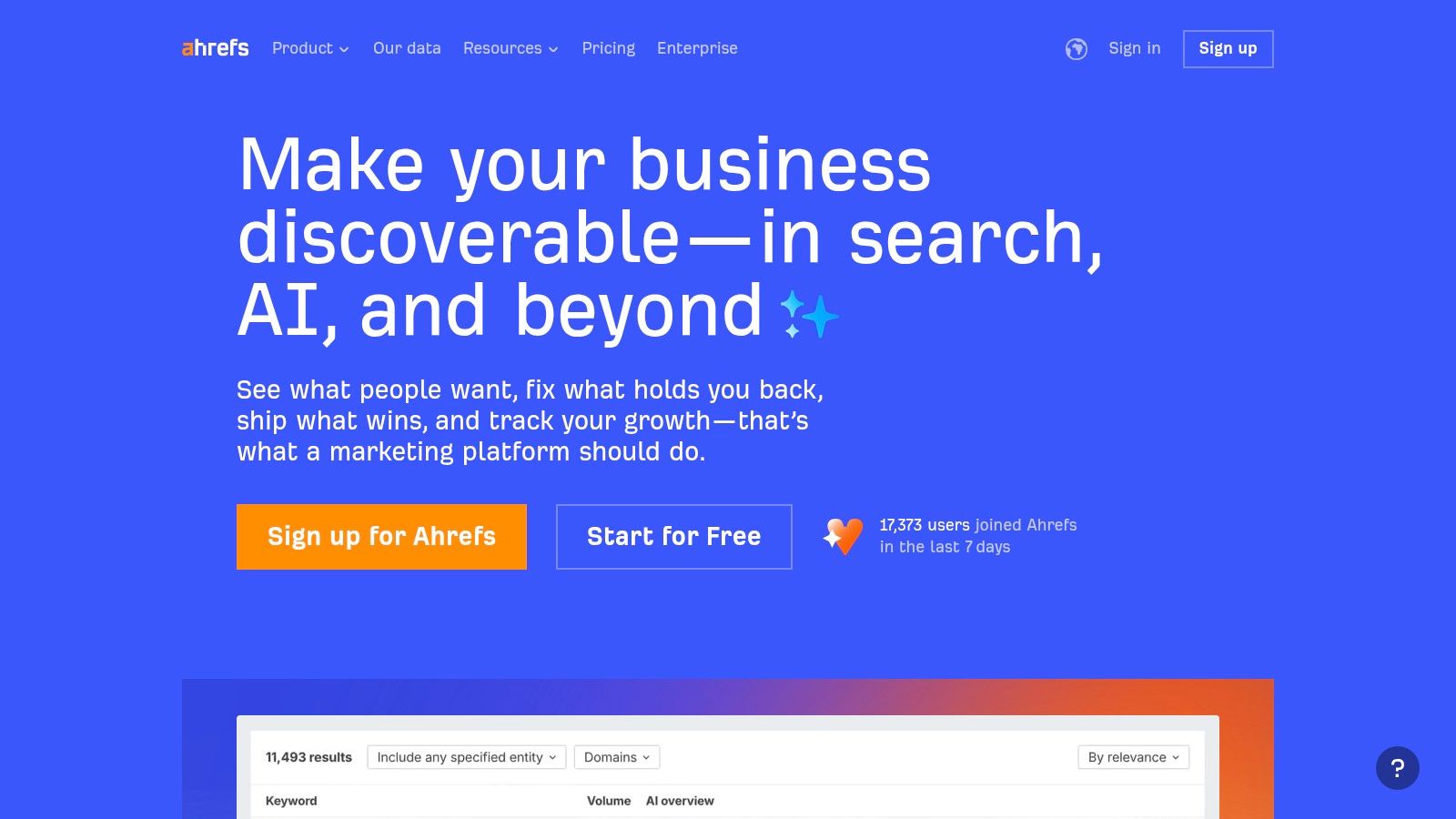
Ahrefs is a powerhouse SEO tool renowned for its world-class backlink index, making it one of the best tools for competitor analysis if your primary focus is on reverse-engineering a rival's link-building and content strategy. Powered by one of the most active web crawlers, it provides exceptionally accurate data on how competitors attract authority and traffic from search engines. For a restaurant equipment supplier, this means pinpointing which industry blogs, news sites, or forums are linking to your competitors, giving you a direct roadmap for your own outreach efforts.
The platform excels at identifying content opportunities. With its Content Gap analysis, you can enter your domain and several competitors' domains to instantly see the keywords they rank for that you don't. This is invaluable for discovering lucrative product categories or blog topics (e.g., "how to clean a commercial deep fryer") that are already working for others in the food service industry but are missing from your own website.
Key Features & Use Case
- Site Explorer: The core of Ahrefs. Enter a competitor’s URL to dissect their backlink profile, top organic keywords, and highest-traffic pages. For example, you can see which specific product pages, like "commercial ice machines," earn them the most valuable backlinks.
- Content Gap Tool: Compare your site against competitors to find keywords they rank for that you don't. This helps you build a content calendar that directly targets proven, traffic-driving topics.
- Site Audit: Benchmark your website's technical SEO health against your rivals. You can run audits on their sites to identify weaknesses in their structure that you can potentially exploit.
Pricing & Limitations
Ahrefs plans begin with the Lite tier at $99/month, but this comes with usage limits that a growing business may quickly outgrow. The platform's strength is its unparalleled link data, but it doesn't offer the same breadth of PPC or social media intelligence as an all-in-one suite. The credit-based system for certain reports can also make costs less predictable. However, for deep-dive SEO analysis, its data quality is often considered the industry standard. You can discover more about the power of backlink analysis in our guide on how to find sites linking to you.
4. SpyFu
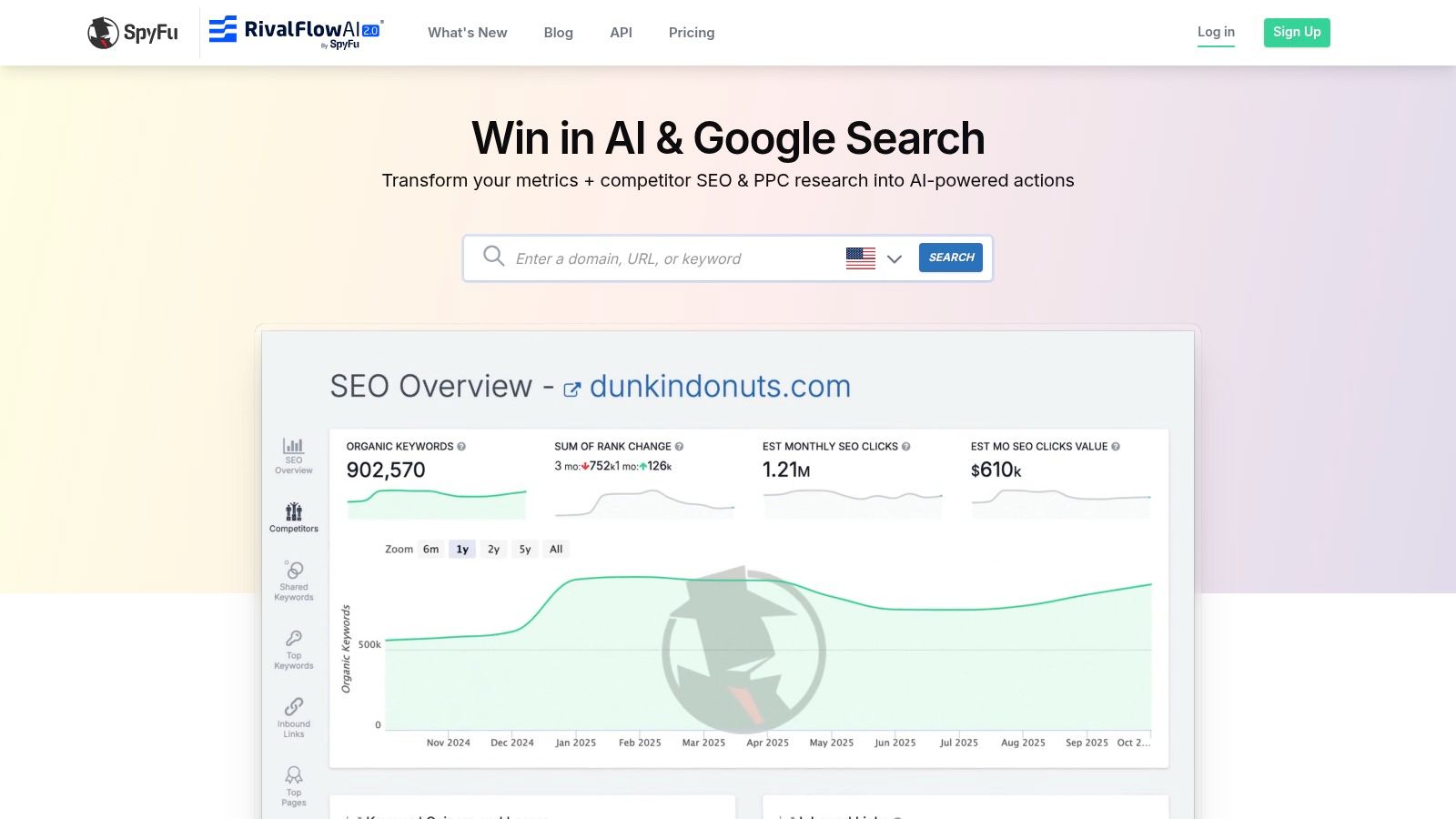
SpyFu is a highly focused competitor intelligence tool with a strong emphasis on PPC and SEO keyword analysis. It stands out by offering a deep historical perspective, allowing you to see the keyword and ad test history of your competitors for up to 15 years. For a restaurant equipment seller, this means you can identify rivals' past advertising strategies, see which keywords they stopped bidding on, and uncover profitable ad copy they've used successfully over time.
Where SpyFu excels is in its affordability and generous data limits, making it one of the best tools for competitor analysis for businesses on a tighter budget. It democratizes access to sophisticated PPC data that is often locked behind much higher price points in other all-in-one suites. The platform's "Kombat" feature lets you directly compare your domain against two competitors to find keyword gaps, or keywords they rank for that you don't.
Key Features & Use Case
-
PPC & SEO Keyword Research: Uncover every keyword a competitor has bought on Google Ads and every keyword they rank for organically. A practical use case is to enter a rival's domain, like
competitor-kitchen-supplier.com, and download their entire list of paid keywords to find new, high-intent terms for your own campaigns. - Competitor "Kombat": Directly compare your keyword profile against two competitors to find "weaknesses" (keywords they rank for that you don't), which provides a clear roadmap for your content strategy.
- Ad History: View a competitor’s most profitable ads and the different ad copy variations they have tested over the years, giving you proven templates for your own ad creation.
Pricing & Limitations
SpyFu offers a very accessible entry point with plans starting around $39/month. A significant advantage is that even its basic plan includes unlimited search results and data exports, which is rare in this space. While its PPC data is robust, the platform's overall backlink and technical SEO datasets are not as comprehensive as top-tier suites like Semrush or Ahrefs. The interface can also feel slightly less polished, but for its core purpose of ad and keyword spying, it delivers exceptional value.
5. BuzzSumo
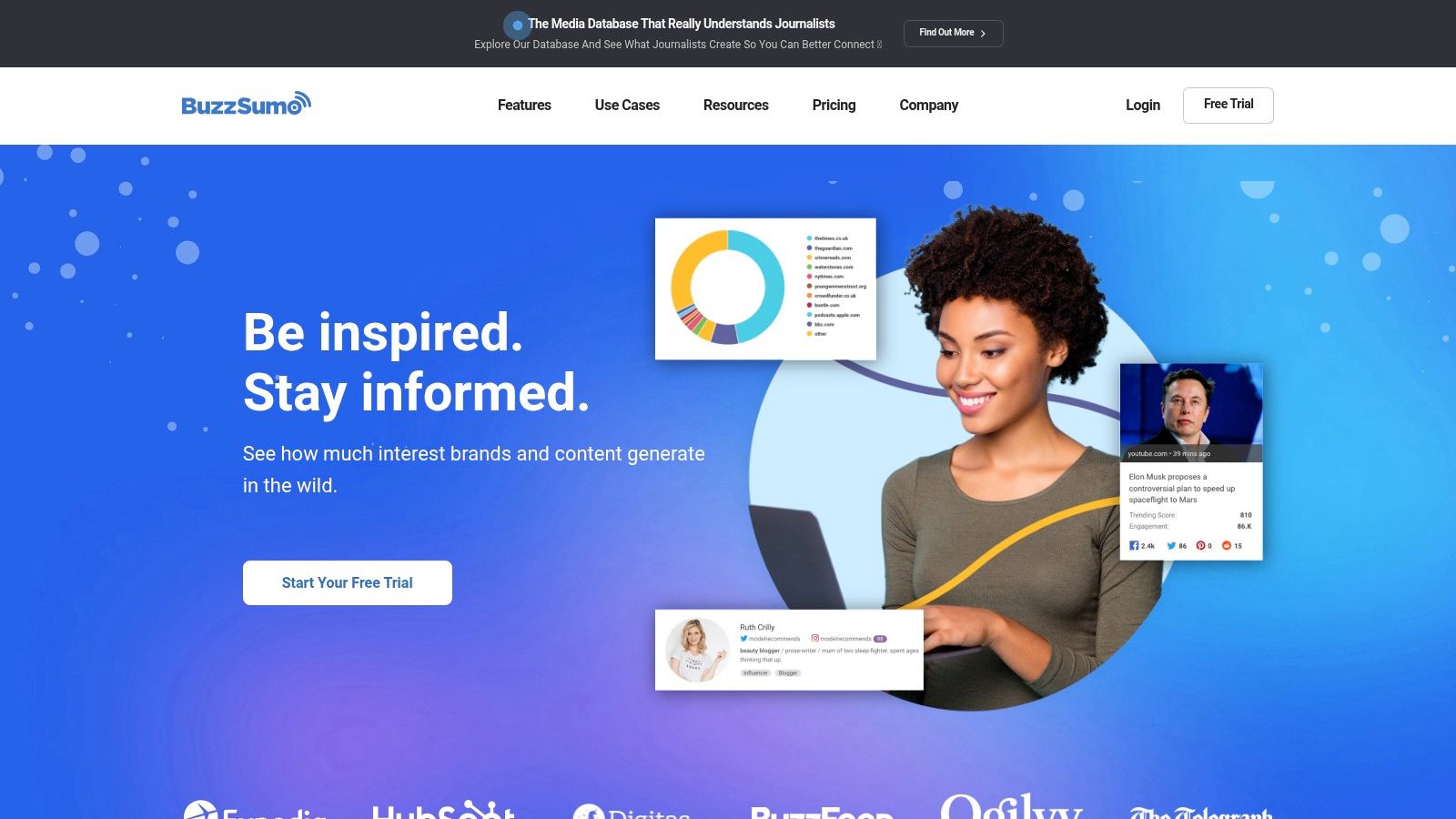
BuzzSumo is a content intelligence platform that shifts the focus from broad SEO metrics to what truly resonates with your audience. It's one of the best tools for competitor analysis for editorial and PR teams, revealing which topics, formats, and publishers are driving engagement in the restaurant equipment space. For a seller, this means you can see exactly which blog posts, videos, or articles about "commercial ice makers" are getting the most social shares and backlinks, providing a clear roadmap for your content creation.
The platform excels at identifying viral trends and high-performing competitor content. Instead of guessing what to write about, you can search for a competitor's domain and instantly see their most successful content from the past year. This allows you to reverse-engineer their strategy, identify content gaps they've missed, and create assets that are proven to attract attention and links from industry authorities.
Key Features & Use Case
- Content Analyzer: Discover the most shared content across any topic or competitor domain. A great use case is to identify a rival’s most-linked-to "commercial refrigerator buying guide" to understand what made it successful and create a more comprehensive version.
- Backlink & Social Analysis: Monitor who is linking to your competitors' content and track their social media performance to find opportunities for outreach and collaboration.
- Brand & Content Mention Alerts: Set up real-time alerts to be notified whenever a competitor is mentioned online or publishes a new piece of content, keeping you a step ahead.
Pricing & Limitations
BuzzSumo offers several paid plans, starting around $199/month, with a limited free plan and free trial available. Its strength is its laser focus on content and PR, which is invaluable for building brand authority. However, it is not a comprehensive SEO or PPC suite like Semrush or Ahrefs. For businesses prioritizing technical SEO or paid ad analysis, it should be used as a complementary tool. You can see how these insights fit into a broader plan in our guide to building an SEO content strategy.
6. Owler
Owler is a company intelligence platform that focuses on competitive tracking from a business and corporate perspective. While other tools concentrate on digital marketing signals, Owler provides a real-time feed of a competitor’s corporate health, including funding announcements, acquisitions, leadership changes, and curated news mentions. For a restaurant equipment seller, this means you can monitor a competitor’s strategic moves, such as a new round of funding that might signal an aggressive expansion or an acquisition that changes the market landscape.
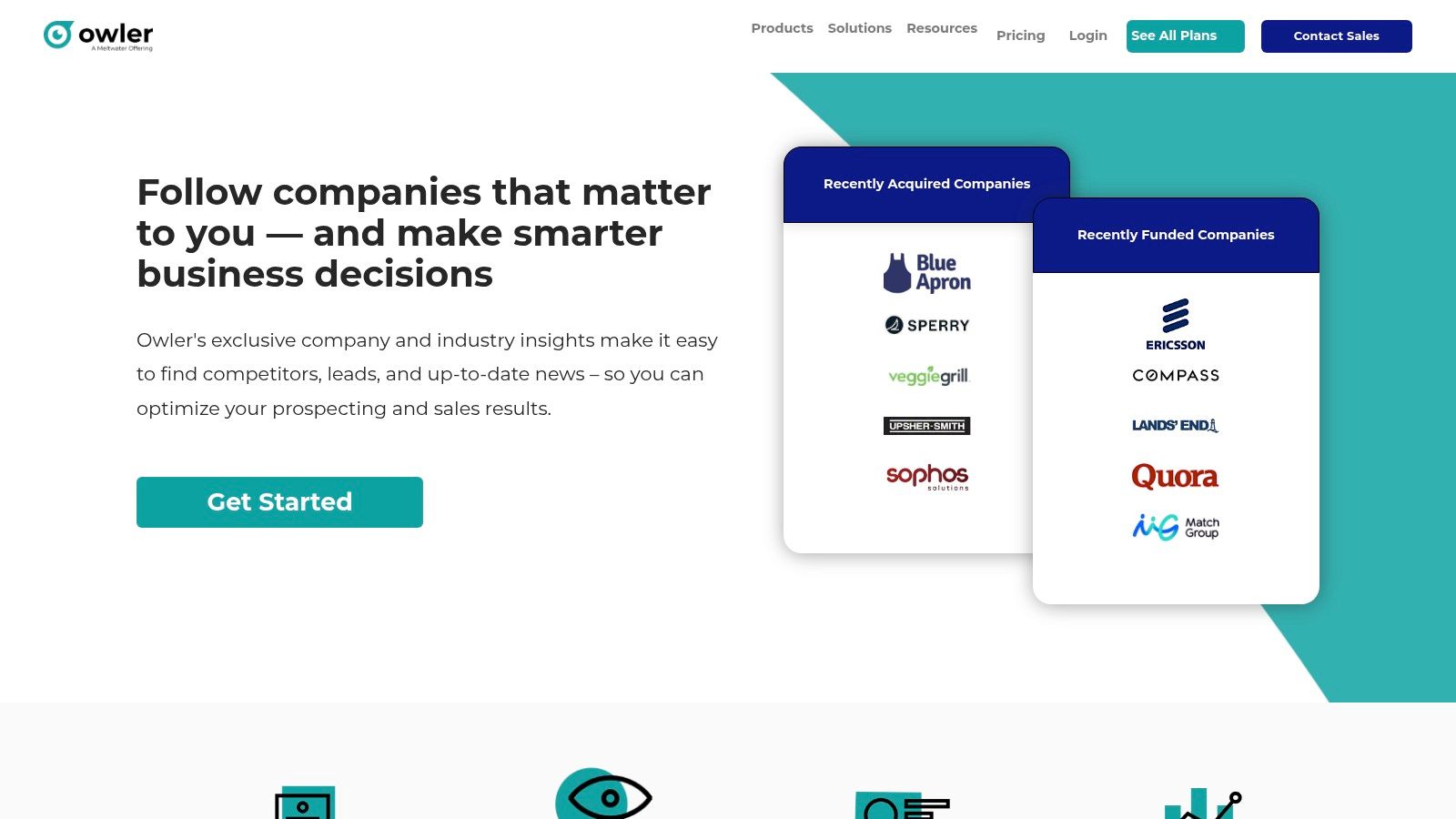
The platform’s strength lies in its simplicity and focus on curated business intelligence. It’s less about keyword data and more about understanding the stories and strategies behind the companies you compete with. For instance, if a major competitor like competitor-equipment-supply.com hires a new VP of Sales from a larger corporation, Owler will alert you. This insight could predict a shift in their sales strategy, giving you time to prepare a counter-move, making it one of the best tools for competitor analysis focused on business intelligence.
Key Features & Use Case
- Curated News Alerts & Competitor Tracking: Follow specific companies and receive daily or weekly email digests summarizing their latest news, press releases, and blog posts. This is ideal for staying informed without needing to actively search for information.
- Company Profiles & Relationships: Access profiles for over 20 million companies, detailing their funding, estimated revenue, leadership team, and a map of their key competitors, customers, and partners.
- Strategic Move Monitoring: Get alerted to significant events like acquisitions, funding rounds, and executive team changes that can impact your market position and sales strategy.
Pricing & Limitations
Owler offers a free Community plan with limited features, but its Pro plan starts at $49/month per user, offering unlimited follows and deeper insights. While it is an inexpensive way to track many competitors, its data depth doesn't match premium competitive intelligence suites like Semrush or Ahrefs. It is more tailored for sales, business development, and strategy teams than for in-depth digital marketing analysis. For a comprehensive view, it should be used alongside an SEO-focused tool.
7. Crunchbase
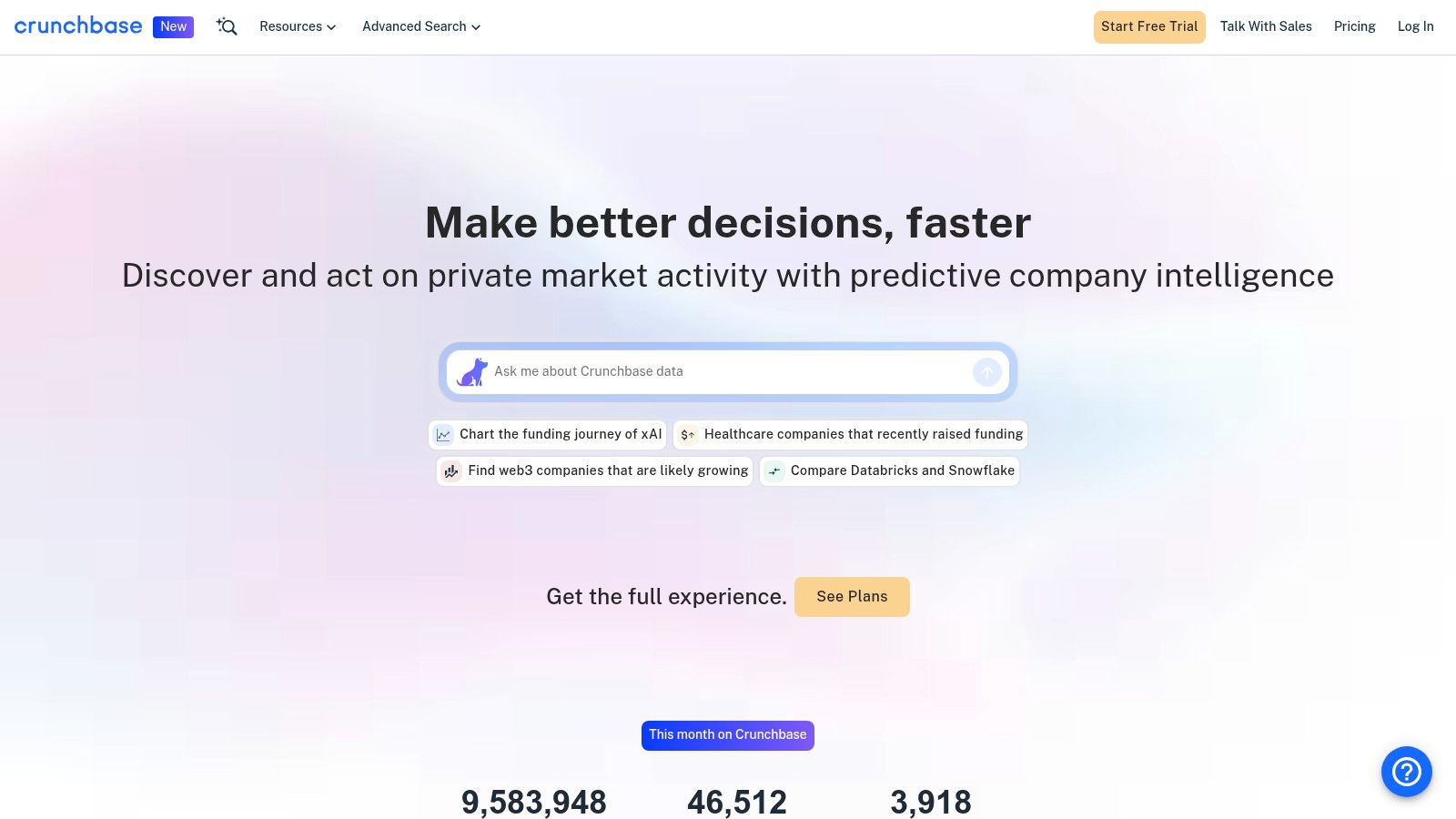
Crunchbase is a leading platform for private-company intelligence, offering a different but equally vital angle for competitive analysis. While SEO tools focus on digital marketing footprints, Crunchbase uncovers the corporate and financial health of your competitors. For a restaurant equipment seller, this means you can track a rival's funding rounds, identify their key investors, monitor leadership changes, and even get alerts on acquisitions, providing deep market intelligence that signals their growth trajectory and strategic intent.
This platform is invaluable for understanding the business-level threats and opportunities in your market. For instance, if you see a direct competitor just raised a significant Series B funding round, it's a strong indicator they are preparing for aggressive expansion, a major product launch, or a large-scale marketing push. This insight allows you to proactively adjust your own strategy, making it one of the best tools for competitor analysis from a corporate finance perspective.
Key Features & Use Case
- Company & Funding Data: Access detailed profiles on private companies, including their funding history, investors, and acquisition activity. A practical use case is creating a watchlist of emerging, venture-backed competitors in the food-tech or restaurant supply space to anticipate market disruption.
- Advanced Search & Alerts: Use powerful filters to find companies based on location, industry, funding stage, and more. You can set up alerts to be notified automatically when a competitor you're tracking announces new funding or is acquired.
- Market Intelligence: Identify key personnel and leadership changes within competing organizations, which can often signal a shift in strategy or provide an opportunity for sales and partnership outreach.
Pricing & Limitations
Crunchbase offers a limited free version, with its paid Pro plan starting at around $49/month per user (billed annually). While it provides unparalleled insight into the startup and venture capital ecosystem, its data is less focused on the digital marketing metrics that tools like Semrush or Ahrefs provide. The most powerful features, like CRM integrations and API access, are reserved for higher-priced Enterprise plans. For pure SEO or PPC analysis, it's not the right tool, but for strategic business intelligence, it is essential.
8. BuiltWith
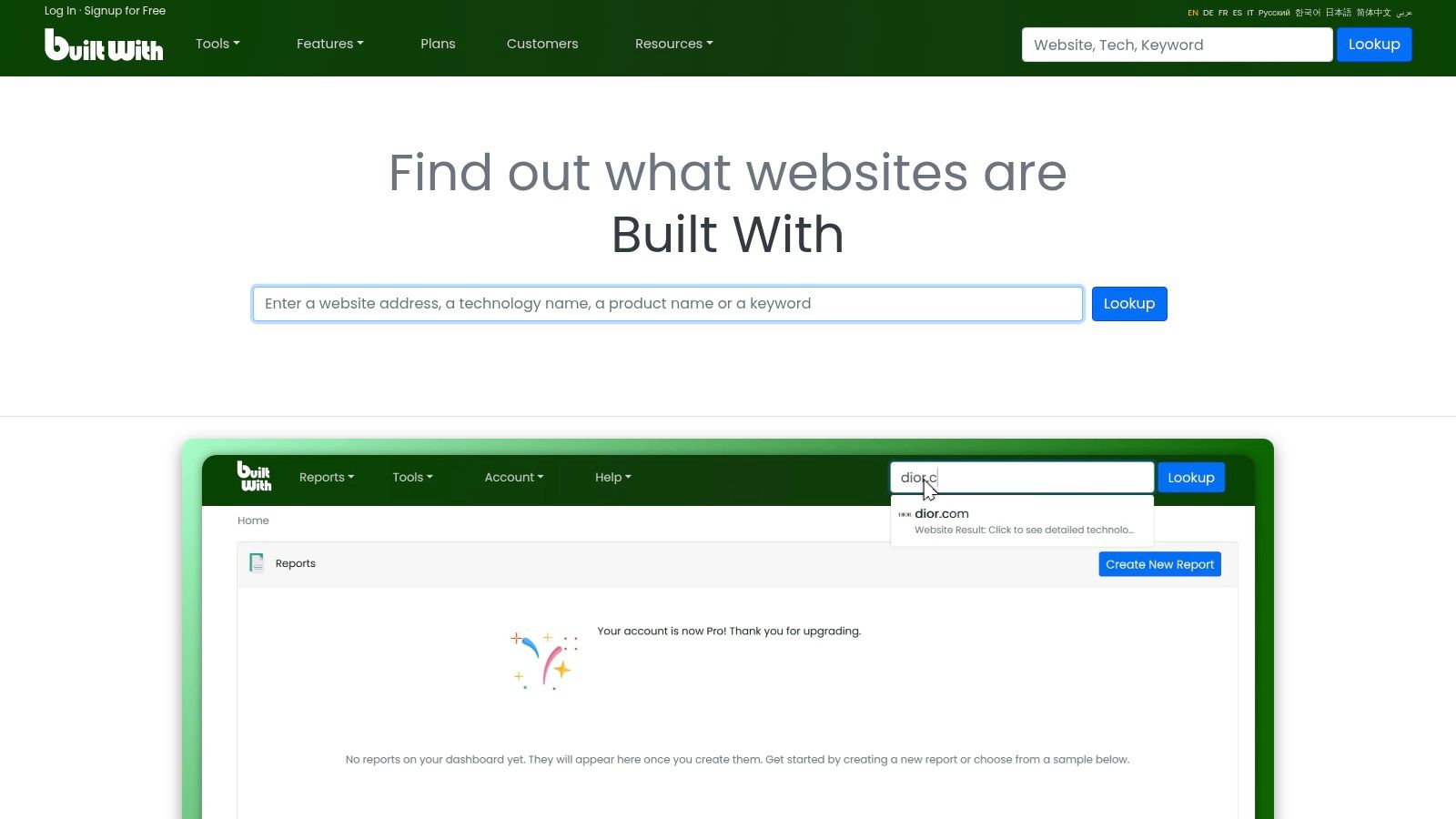
BuiltWith is a technology profiling tool that peels back the curtain on a competitor's website to reveal the software and technologies powering it. While other tools focus on keywords and traffic, BuiltWith answers a different question: "What is their website built with?" For a restaurant equipment seller, this means you can discover if a rival uses Shopify for e-commerce, Klaviyo for email marketing, or specific advertising pixels like the one for Facebook or Google Ads.
This intelligence is invaluable for understanding a competitor's operational sophistication and marketing focus. If you see they’ve invested in advanced analytics or a premium e-commerce platform, it signals a serious commitment to their online presence. This makes it one of the best tools for competitor analysis for deconstructing a rival’s digital infrastructure and identifying potential technology-driven advantages or weaknesses you can exploit.
Key Features & Use Case
- Technology Stack Lookup: Instantly see a detailed list of every detectable technology on a competitor's site, from analytics and tracking scripts to e-commerce platforms and advertising networks. A practical use case is to check if a key competitor is using a particular payment gateway or a new retargeting ad platform.
- Lead Generation & Market Analysis: Build lists of websites that use (or don't use) a specific technology. For example, you could generate a list of all restaurant suppliers using Magento to understand platform market share.
- Historical Tech Trends: See which technologies a competitor has added or removed over time, providing clues about their strategic shifts or A/B tests.
Pricing & Limitations
BuiltWith offers free individual site lookups, making it highly accessible for quick checks. Paid plans, which provide lead generation, unlimited reports, and historical data, start at $295/month. The interface is highly functional and data-rich but can feel utilitarian compared to more graphically polished SaaS platforms. While the pricing for advanced features is geared toward sales and marketing teams, the free lookup tool provides more than enough value for foundational competitive research.
9. data.ai (formerly App Annie)
While not a traditional SEO or web analytics platform, data.ai offers a specialized lens into the competitive landscape for businesses that have, or are considering, a mobile app presence. It provides enterprise-grade competitive intelligence for the mobile ecosystem, covering everything from app store rankings to user acquisition strategies. For a forward-thinking restaurant equipment seller, this could mean analyzing a competitor’s mobile app used for ordering parts or managing warranties.
The platform is one of the best tools for competitor analysis in the mobile space because it uncovers data you simply can’t find elsewhere, like estimated app downloads, revenue, and user engagement metrics. If a major competitor like WebstaurantStore has a successful app, data.ai can reveal the keywords they target in the app store, their most effective ad creatives in mobile campaigns, and which features drive the most user activity. This insight is crucial for deciding whether to invest in your own app or how to position it for success.
Key Features & Use Case
- Store & Performance Benchmarking: Analyze an app's performance in both the Apple App Store and Google Play Store. A practical use case is to monitor a competitor’s app to see if a recent update led to a spike in downloads or positive reviews, indicating a feature that resonates with customers.
- Downloads & Revenue Estimates: Gain insight into the commercial success of competing apps, helping you forecast the potential ROI of developing your own mobile application.
- Audience & Category Benchmarking: Understand the user demographics and behavior patterns for competing apps, allowing you to tailor your mobile strategy to the right audience.
Pricing & Limitations
Data.ai is an enterprise-level tool, and its pricing is not publicly listed; you must engage with their sales team for a custom quote. Now part of Sensor Tower, access requires a commercial agreement. This high barrier to entry and cost make it unsuitable for businesses just exploring mobile. However, for large-scale operations where a mobile app is a core part of the business strategy, its deep, specialized data provides a significant competitive advantage. More information is available at data.ai.
10. Brandwatch (Cision)
Brandwatch is an enterprise-level social listening and consumer intelligence platform that moves competitor analysis beyond SEO and ads into the realm of public conversation. It is one of the best tools for competitor analysis when your goal is to understand brand perception, sentiment, and share of voice. For a restaurant equipment seller, this means you can monitor what customers, critics, and industry influencers are saying about your competitors’ products and services across millions of online sources in real-time.
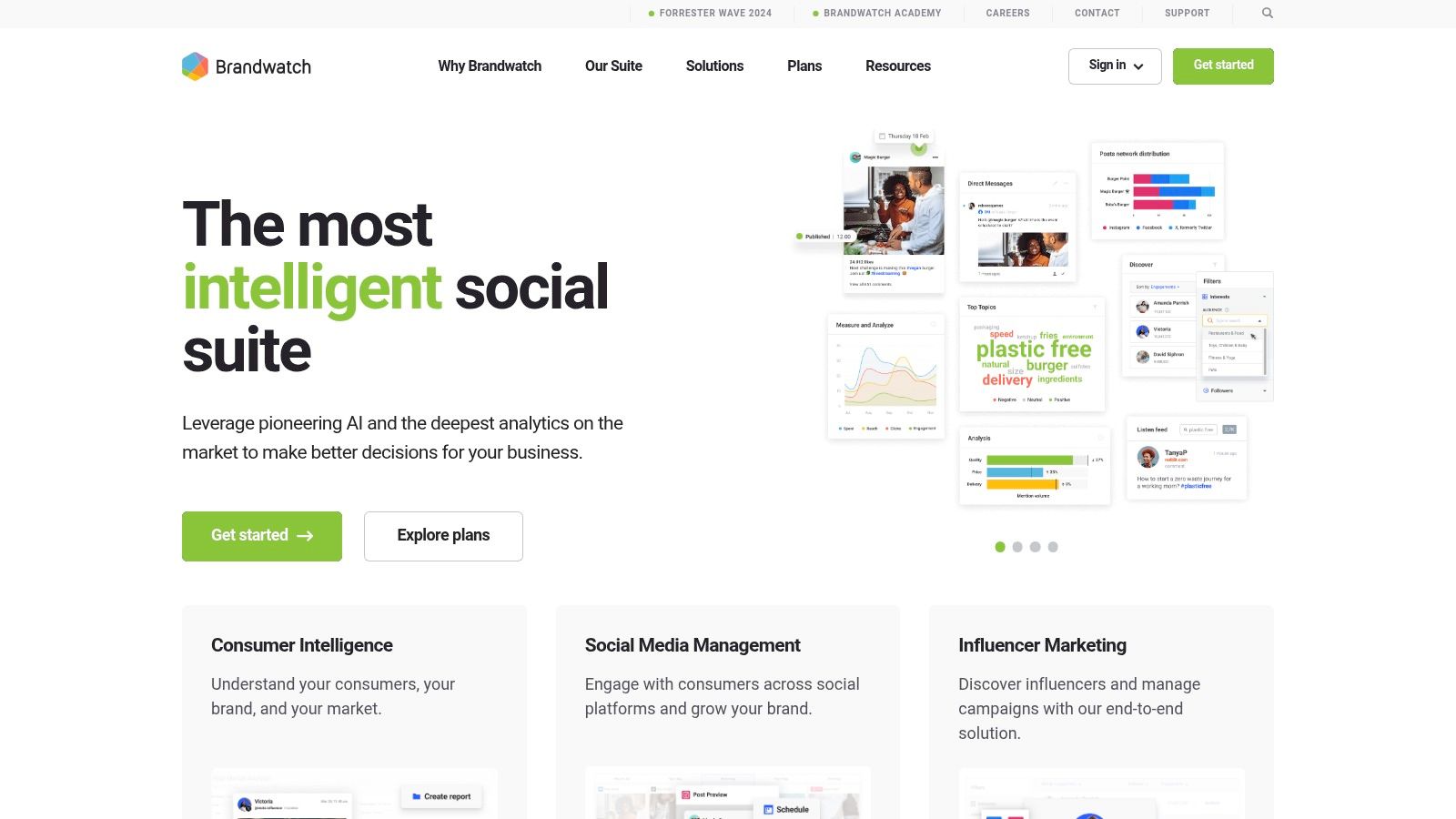
The platform’s strength lies in its ability to track brand mentions, identify emerging trends, and alert you to potential PR crises before they escalate. You could set up alerts for a competitor’s new line of commercial refrigerators to gauge immediate market reaction or track conversations around industry trade shows to see which brands are generating the most buzz. If you're already familiar with Brandwatch, you might also be interested in exploring Brandwatch alternatives to broaden your competitive intelligence stack.
Key Features & Use Case
-
Real-Time Social Monitoring: Track mentions of competitor brands, products, and key executives across social media, forums, blogs, and news sites. A use case would be to create a custom dashboard monitoring mentions of
competitor-brand-convection-ovensto analyze customer complaints or praise. - Consumer Intelligence & Sentiment Analysis: Go beyond simple mention counts to understand the emotion behind conversations, helping you identify competitor weaknesses or opportunities for your own marketing messages.
- Influencer Discovery: Identify key opinion leaders and influencers who are already talking about your competitors, providing a target list for your own outreach and partnership campaigns.
Pricing & Limitations
Brandwatch pricing is not publicly listed and is targeted at enterprise-level clients, often requiring a custom quote. Median buyer-reported costs are frequently in the $10,000+ per year range, making it a significant investment. The platform can be complex and may require dedicated personnel to manage effectively. For smaller businesses focused solely on SEO or ad data, its extensive social listening capabilities might be more than what is needed.
11. Crayon
Crayon is a dedicated competitive intelligence platform that moves beyond general SEO or marketing data to provide a centralized hub for tracking competitor movements. While many tools focus on a specific channel, Crayon automates the collection of intelligence across a rival’s entire digital footprint, making it one of the best tools for competitor analysis for go-to-market teams. For a restaurant equipment seller, this means getting real-time alerts when a competitor changes its website copy, updates product pricing on a commercial freezer, or launches a new marketing campaign.
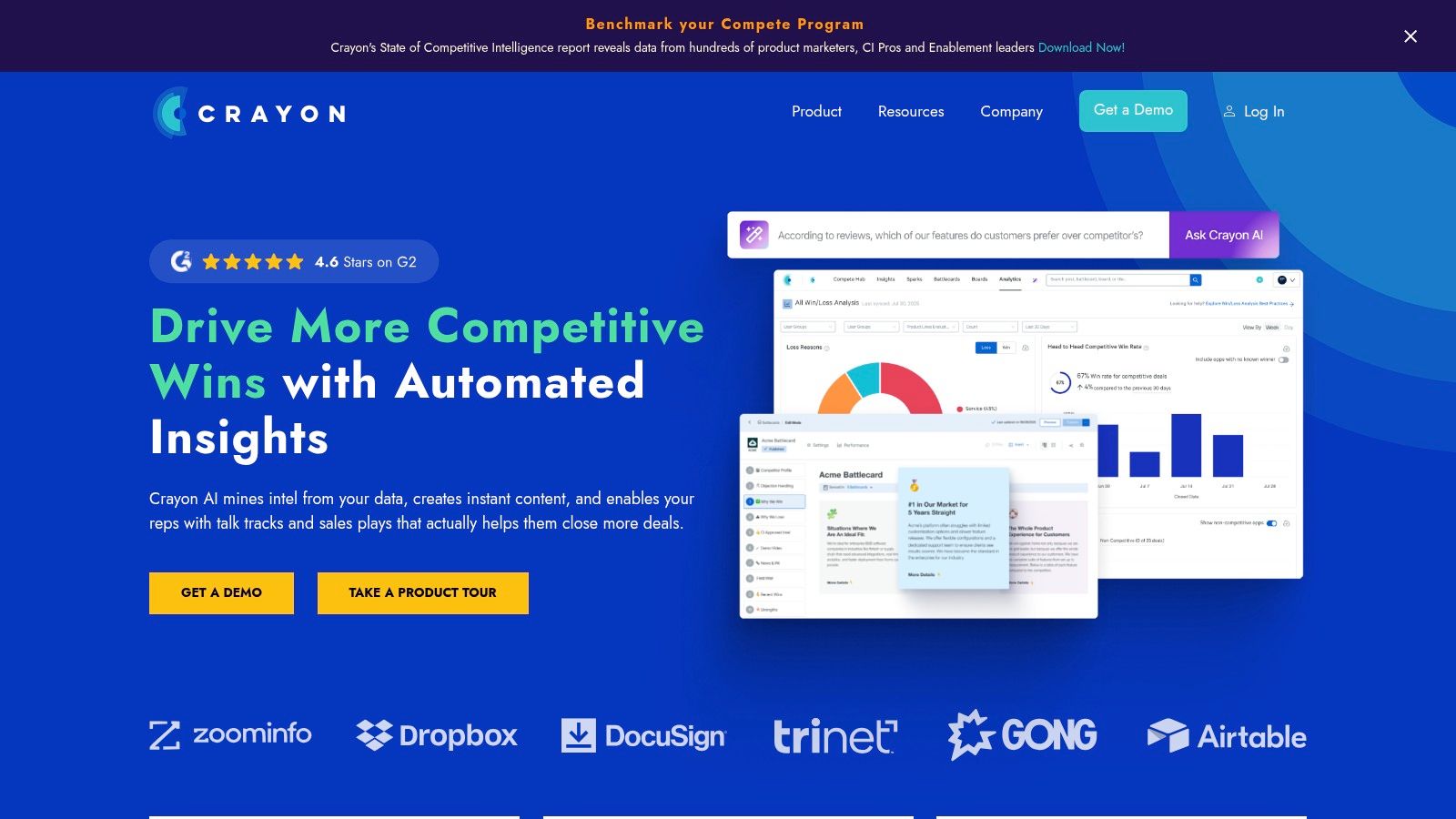
The platform is purpose-built to turn raw data into actionable insights for sales and marketing teams. Instead of just showing you a competitor’s keywords, Crayon helps you understand their strategic shifts. For instance, you could track when a key competitor like competitor-supply.com adds a new financing page or changes the feature list on their most popular ice machine, allowing your sales team to prepare counter-messaging immediately.
Key Features & Use Case
- Automated Competitor Tracking: Monitors over 100 data types across competitors' websites, product reviews, pricing pages, social media, and news mentions to capture every move automatically.
- Sales Battlecards: Enables the creation and distribution of dynamic battlecards that equip your sales team with up-to-date competitive positioning, strengths, and weaknesses to win more deals.
- Program Analytics: Measures the impact and ROI of your competitive intelligence program by tracking how sales teams engage with and use the insights you provide.
Pricing & Limitations
Crayon does not offer public pricing; you must schedule a demo and speak with their sales team to get a custom quote. This enterprise-focus means it requires a more significant investment and implementation effort than a self-serve SaaS tool. While it's incredibly powerful for scaling a formal CI program, smaller businesses looking for simple SEO or ad tracking might find it too comprehensive and costly for their immediate needs. Learn more at https://www.crayon.co/.
12. G2 (Competitive Intelligence category)
G2 is a massive software marketplace, and its Competitive Intelligence category functions as a meta-tool for finding the right solution. Instead of providing direct data, it offers a crowdsourced perspective, making it one of the best tools for competitor analysis research. For a restaurant equipment seller, this means you can compare dozens of platforms side-by-side, validated by reviews from real users who might share your same business challenges.
The platform excels at providing a bird's-eye view of the competitive intelligence software landscape. You can filter tools based on company size, specific features like market intelligence or social media monitoring, and user satisfaction ratings. This allows you to quickly create a shortlist of potential tools that fit your specific needs and budget, saving you hours of independent research. Think of it as the starting point for your tool-finding journey.
Key Features & Use Case
- Filtered Category Search: Refine the extensive list of tools by specific criteria. A practical use case is filtering for platforms that integrate with Salesforce and have high satisfaction ratings from small businesses, helping you find a perfect-fit CRM and intelligence combo.
- Crowdsourced User Reviews: Read detailed pros and cons from actual users to understand a tool’s real-world performance beyond its marketing copy.
- Comparison Grids & Reports: Use G2’s proprietary grids to visually compare top players based on market presence and customer satisfaction, helping you quickly identify industry leaders.
Pricing & Limitations
Access to G2's comparison pages and reviews is completely free. However, pricing information on the individual tool listings can sometimes be vague, often requiring you to click through to the vendor’s site for details. The primary limitation is the variability in review quality and recency; some products may have outdated feedback. Always cross-reference your findings here with a direct demo or trial from the vendor. You can start your research at G2's Competitive Intelligence category.
Top 12 Competitor Analysis Tools — Feature Comparison
| Tool | Core Focus ✨ | Best For 👥 | Strengths / USP 🏆 | Pricing / Value 💰 | Quality ★ |
|---|---|---|---|---|---|
| Semrush | All‑in‑one SEO/PPC/content/social ✨ | Agencies & growth teams 👥 | Broad dataset & deep historical reports 🏆 | Mid–High; add‑ons raise cost 💰 | ★★★★★ |
| Similarweb | Traffic & market intelligence ✨ | Market sizing & channel analysts 👥 | Clear site benchmarking & channel breakdowns 🏆 | Mid; higher tiers for country/history 💰 | ★★★★☆ |
| Ahrefs | Backlink & keyword crawler‑first ✨ | SEO teams & link builders 👥 | High‑quality link DB & gap analysis 🏆 | Mid–High; scales with usage 💰 | ★★★★★ |
| SpyFu | PPC + SEO historical insights ✨ | SMBs & PPC-focused teams 👥 | Strong PPC visibility; generous exports 🏆 | Lower‑Mid; affordable plans 💰 | ★★★☆☆ |
| BuzzSumo | Content intelligence & social analysis ✨ | Content, PR & editorial teams 👥 | Surfaces high‑performing content & influencers 🏆 | Mid; costly at scale 💰 | ★★★★☆ |
| Owler | Company news & competitor alerts ✨ | Sales & business development 👥 | Inexpensive competitor tracking & email alerts 🏆 | Low–Mid; entry friendly 💰 | ★★★☆☆ |
| Crunchbase | Private-company funding & signals ✨ | Investors, sales & market researchers 👥 | Strong funding coverage & watchlists 🏆 | Mid; pro features paywalled 💰 | ★★★★☆ |
| BuiltWith | Tech‑stack detection & lead lists ✨ | Outreach & tech profiling 👥 | Fast tech profiling; exportable leads 🏆 | Mid–High; per‑use options 💰 | ★★★☆☆ |
| data.ai | App store & mobile market intelligence ✨ | Mobile publishers & UA teams 👥 | Deep app rankings, installs & revenue estimates 🏆 | Enterprise; sales engagement required 💰 | ★★★★☆ |
| Brandwatch (Cision) | Enterprise social listening ✨ | PR, brand & product teams 👥 | Broad source coverage & customizable dashboards 🏆 | High; enterprise budgets 💰 | ★★★★☆ |
| Crayon | Automated competitive intelligence ✨ | GTM, sales enablement teams 👥 | Purpose‑built CI, battlecards & program analytics 🏆 | Enterprise; sales required 💰 | ★★★★☆ |
| G2 (CI category) | Software marketplace & reviews ✨ | Buyers comparing CI tools 👥 | Crowdsourced reviews and vendor links 🏆 | Free to browse; vendor pricing varies 💰 | ★★★★☆ |
From Insight to Action: Building Your Competitor Analysis Stack
We've explored a comprehensive arsenal of the market's best tools for competitor analysis, from the all-encompassing SEO suites like Semrush and Ahrefs to the specialized technology profilers like BuiltWith. Navigating this landscape can feel overwhelming, but the goal is not to master every single platform. The true objective is to build a strategic, interconnected system-a 'competitor analysis stack'-that delivers actionable intelligence directly relevant to your restaurant equipment business.
The journey from raw data to market dominance is paved with deliberate, strategic choices. Simply subscribing to a tool is not a strategy. The real power is unlocked when you combine the outputs from different platforms to paint a complete picture of your competitive environment.
Key Takeaways: From Data Collection to Strategic Execution
Remember, effective competitor analysis is an ongoing process, not a one-time project. It’s a continuous loop of gathering data, interpreting insights, taking action, and measuring results.
- No Single Tool is a Silver Bullet: As we've seen, each tool has its strengths. Ahrefs excels at backlink analysis, while Similarweb provides unparalleled traffic insights. Your ideal setup will likely involve a combination of two or three core tools that cover your specific blind spots.
- Focus on Actionable Insights: A dashboard full of metrics is useless without a plan. The critical question to ask is always, "How can we use this information?" If SpyFu reveals a competitor is bidding on "commercial convection oven financing," your action might be to create a detailed landing page and ad campaign targeting that exact long-tail keyword.
- Integrate, Don't Isolate: The data from these tools should inform every part of your business. SEO insights from Semrush should guide your content team. Competitive pricing data can inform your sales strategy. New market entrants flagged by Owler or Crunchbase should be on your leadership team's radar.
Building Your Custom Tool Stack: A Practical Approach
So, where do you begin? Start by identifying your most significant knowledge gap. What is the one piece of competitive information that could most impact your business right now?
- If you are struggling with organic search traffic: Your starting stack should be built around a powerful SEO tool. Choose Semrush or Ahrefs as your foundation. Use its keyword gap and backlink analysis features to identify immediate opportunities to outperform your direct rivals in search results.
- If you need to understand the broader market and traffic sources: Begin with Similarweb. It provides the high-level view you need to understand where competitors are getting their customers, be it from social media, referral partnerships, or paid ads. This helps you allocate your marketing budget more effectively.
- If your primary focus is content marketing: BuzzSumo is your non-negotiable starting point. Combine its insights with your core SEO tool to find topics that are proven to resonate with your audience and also have a high potential to rank well in search engines.
Once you establish your foundational tool, you can layer in more specialized platforms as needed. For instance, a restaurant equipment seller might use BuiltWith once a quarter to see which competitors have adopted a new e-commerce platform like Shopify or BigCommerce, revealing potential shifts in their online sales strategy.
Ultimately, the best tools for competitor analysis are the ones that you consistently use to make smarter, faster, and more informed decisions. Don't let analysis paralysis stop you. Pick a starting point, dive into the data, and turn those valuable insights into a tangible competitive advantage that drives real growth for your restaurant equipment business.
Transforming this complex data into a winning strategy is where expertise makes all the difference. If you're ready to move beyond dashboards and turn competitive intelligence into a powerful engine for growth, the team at Restaurant Equipment SEO can build and execute the data-driven plan you need. Let us help you leverage the best tools for competitor analysis to dominate your market.