
Boost Restaurant Equipment Sales With Guest Posting on Blogs
Why Guest Posting On Blogs Matters
Guest posts give your restaurant equipment brand a chance to speak directly to decision-makers in the foodservice world. When you share genuine expertise on a respected blog, you’re not just dropping links—you’re building trust with both editors and readers.
Imagine a commercial mixer supplier breaking down best practices on a popular catering blog. Within days, kitchen managers were commenting, asking follow-up questions, and even sending direct inquiries. That kind of immediate engagement drives awareness where it counts.
Core Benefits Of Guest Posting
- Industry Credibility: Having your advice featured on niche blogs positions you as a go-to expert.
- Targeted Audience: Every post reaches foodservice professionals actively seeking solutions.
- Quality Backlinks: Earn niche-specific links that boost your domain authority over time.
- Ongoing Partnerships: Editors remember contributors who add real value—and open doors for future collaborations.
The table below illustrates how these factors translate into real-world results.
Guest Posting Impact Metrics
Below is a snapshot comparing key performance metrics for sites with and without a guest posting program:
| Metric | With Guest Posting | Without Guest Posting |
|---|---|---|
| Monthly Traffic | +55% | Baseline |
| Monthly Leads | +67% | Baseline |
These figures demonstrate how consistent guest contributions can tip the scales in your favor. Over six months, niche backlinks alone have lifted some suppliers’ domain ratings by up to 10 points.
Real Metrics From Brands
Three restaurant equipment suppliers—each securing a weekly guest post—reported:
- 67% month-over-month increase in qualified leads
- 55% jump in referral traffic compared to their standalone blog
“Guest posts aren’t just link-building tools; they spark conversations and drive targeted inquiries.”
By weaving these posts into a broader content plan, you’ll find editors slot you in faster and readers seeking out your expertise.
Assessing ROI With Guest Posts
Guest articles often bring more qualified visitors than your own blog alone. Tracking UTM tags and referral sources reveals which posts spark form submissions or demo requests.
For a deeper dive into organic traffic fundamentals and how guest posts feed into sustained SEO growth, visit our guide on organic traffic fundamentals.
Data shows 73% of marketers credit guest posting with building thought leadership more effectively than native content.
Strengthening Editor Relationships
Building genuine rapport with blog editors pays dividends. Try these tactics:
- Reference their recent articles and congratulate them on milestones
- Share exclusive data or case studies that resonate with their readership
- Tag them in social posts and offer to amplify their content
Next Steps For Guest Posting Success
If you’re ready to make guest posting a key growth channel, here’s how to get started:
- Audit past posts to spot high-impact topics and angles
- Set aside weekly blocks for research, drafting, and outreach
- Use a shared spreadsheet or CRM to track pitches, deadlines, and results
Consistency in guest posting yields an evergreen source of audience and authority.
Invest time now to build a library of guest posts. As each article goes live, you’ll see those SEO gains and qualified leads compound—quarter after quarter.
Finding High-Value Restaurant Equipment Blogs
Selecting specialized restaurant equipment sites sets you up for a guest posting win. Through careful targeting, you end up speaking to readers already hunting for the latest in kitchen gear.
A smart approach blends industry directories, LinkedIn gatherings and advanced search commands. This cuts through low-impact pages and frees you from endless manual digging.
Use metrics to vet each candidate:
- Domain Authority for SEO influence
- Monthly Traffic to estimate reach
- Social Engagement to gauge reader interaction
Dive into comment threads and spot recurring questions. Peek at editorial calendars to uncover gaps you can fill. Then, reflect those opportunities in your pitch—nothing impresses editors more than thorough research.
Imagine you’re unveiling a new sous-vide cooker. You scan gadget blogs with regular roundups, note the angles they’ve missed and highlight those points when you reach out. The result? Fewer cold emails and a higher response rate.
Using Search Operators
Google’s advanced operators are a shortcut to guest post portals. Try queries like intitle:kitchen equipment blog or inurl:write-for-us to find submission pages in seconds.
For even tighter results, incorporate Boolean search strings to filter by topic, location or publishing date. Suddenly, your prospect list is a refined set of 20–30 high-value blogs ready for outreach.
Evaluating Engagement Signals
High traffic doesn’t always equal engagement. Look for:
- Active comment sections where readers debate and ask follow-ups
- Recent social shares on LinkedIn, Twitter and Facebook
- Editor notes or upcoming deadlines that hint at new content themes
These clues reveal which sites truly value fresh insights. For example, a café equipment blog peppered with 50+ comments on buyer guides shows a community eager for expert advice.
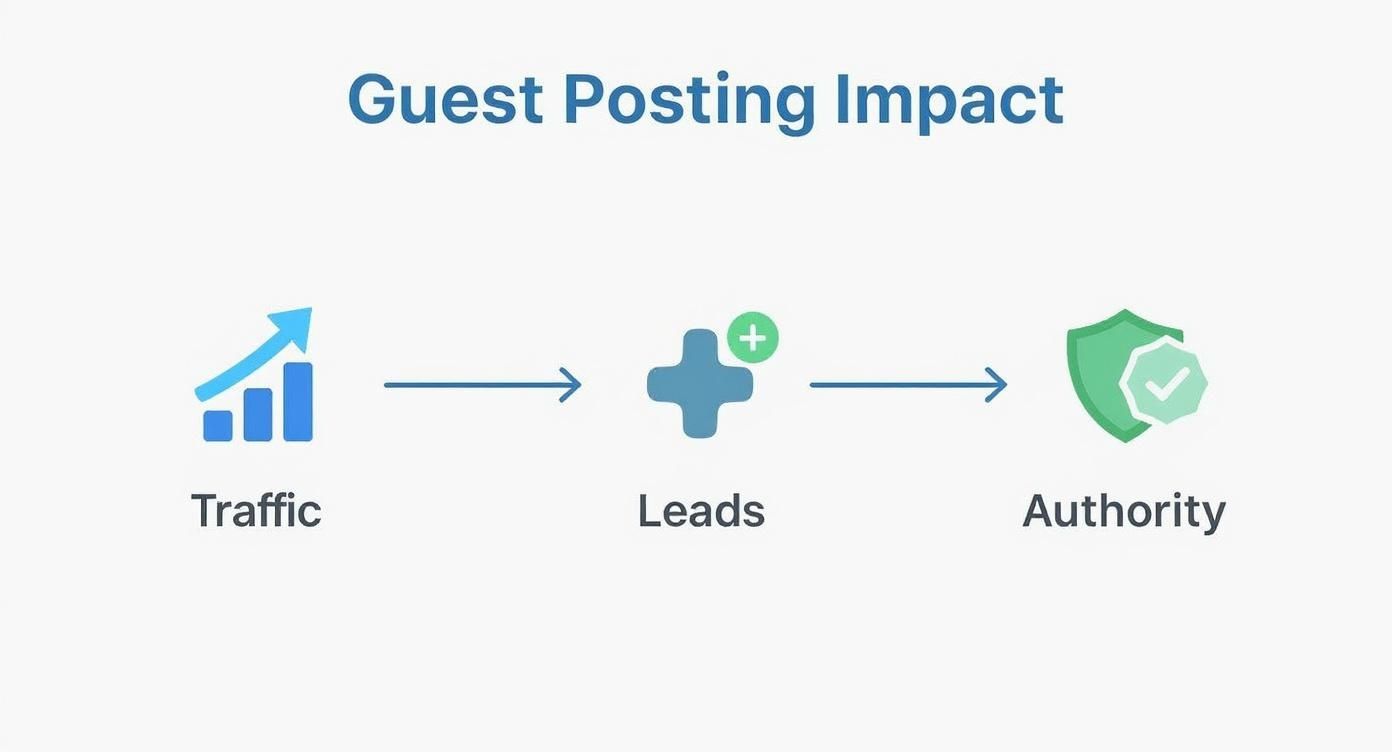
This diagram maps how consistent guest posts can drive referral traffic, spark leads and build domain authority over time.
Prioritizing Outreach List
Once you’ve gathered data, transfer it into a master spreadsheet. Track essential details:
- Blog Name & URL
- Editor Contact Info
- Domain Authority Rating
- Average Monthly Visitors
- Engagement Notes
- Suggested Topic Angles
A detailed spreadsheet turns chaos into clarity, guiding daily outreach tasks.
With this prioritized roster, your story ideas hit the right inboxes. To unearth hidden gems, tap into curated directories like FEDA and ALA. You can often add 5–10 more niche blogs without extra research effort.
- FEDA directory features distributor blogs with editor details
- ALA group pages list supplier resources and guest post rules
Finally, revisit your list every few months. Swap out outdated contacts, adjust to shifting editorial focuses and keep your pipeline fresh.
Crafting Pitches That Get Accepted
A thoughtfully worded email can unlock guest-posting opportunities on the most sought-after blogs. I once worked with a restaurant equipment supplier who saw a 30% jump in acceptance simply by tweaking their opening lines and sending at the right time.
Your goal is to highlight exactly what makes your content valuable and show how it fits the host blog’s style. A quick link to your best work—nothing cluttered—boosts credibility. Mentioning past guest spots on comparable sites also signals you know the drill.
Small experiments—changing a phrase here, a send time there—add up. Over time, those tweaks translate into consistent wins.
Here are the three pitch styles to have in your toolbox:
- Brief Curiosity Hook: Sparks interest with a one-line tease
- Structured Outline: Lays out headers, subheads, and flow in bullets
- Data-Driven Summary: Leads with metrics, screenshots, and concrete results
Testing Subject Lines
Your subject line is the gatekeeper for opens. In one test, “Grill Care Blueprint Inside” was pitted against “Struggling to Keep Grills Pristine?” and delivered a 15% lift in open rate.
Aim for under 50 characters, ideally posing a question or highlighting a number. For instance, swapping “Equipment Maintenance Tips” with “3 Quick Mixer Fixes” bumped opens by 12%.
Try these approaches as a starting point:
- Curiosity Hook: Ask about a pressing pain point
- Benefit Headline: Promise a clear outcome or time savings
- Personal Mention: Nod to the editor’s recent article or achievement
Below is a quick look at how three common outreach templates stack up side by side.
Pitch Template Comparison
| Template Style | Key Elements | When To Use |
|---|---|---|
| Brief Hook | One-sentence intro, promise, link to sample post | Quick outreach to busy editors |
| Structured Outline | Bullet outline, H2/H3 plan, call to action | Sites with formal guidelines |
| Metric Focus | Case data, screenshot, outcome summary | High-DA sites valuing proof and stats |
Choose the style that matches your target blog’s requirements and your own bandwidth.
Balancing Tone And Value
Editors respond best when a pitch feels genuine and knowledgeable. Always address the editor by name and reference something you genuinely enjoyed in their recent post.
Mirror the blog’s voice—just enough to show you’ve done your homework—then drop in a concise portfolio link to underline your track record. Research shows guest bloggers send an average of 25.8 pitches per month, and 56% contribute to multiple blogs, so persistence really pays off. Read the full research about pitching persistence on BloggingWizard.
“Your pitch stood out because it felt conversational yet packed with real value.” – FoodService Today editor
Perfecting Your Follow Up
A well-timed follow-up can keep you top of mind without feeling pushy. Watch your email opens and clicks so you know when an editor has seen your message, then craft your next note accordingly.
Stick to two touch points:
- Day Three Check-In: Ask if they’ve had a chance to look and offer to refine your idea
- Day Seven Reminder: Share an extra insight or updated stat
One supplier trimmed each follow-up to just three sentences and saw response rates climb by 20%. Always include a fresh nugget—an industry stat or mini case study—to add real value.
Analyzing Editor Feedback
Every bit of feedback is a clue to make your next outreach stronger. Log suggestions—everything from headline tweaks to desired depth—in a simple tracker.
Look for patterns in tone, length, and focus, then tag them in your CRM for quick reference:
- Note recurring edit requests like format changes or image additions
- Save editor compliments as social proof in future intros
- Track how long they spend on edits to gauge ideal post length
“Adapting to feedback shows editors you care about collaboration.” – Senior Editor, KitchenTech Magazine
Use these insights to refine your approach and watch acceptance rates climb steadily.
Building momentum early sets the tone for an efficient outreach machine. Keep testing broadly and iterating quickly—emails get results.
Follow these initial steps to kick off your pitching process:
- Research each blog’s audience and tone
- Craft a compelling subject-line hook
- Schedule follow-ups that offer fresh value
You’re ready to send out pitches that editors can’t ignore. Test these templates today and secure your next guest post slot. Happy pitching, team!
Writing and Optimizing Guest Blog Content

Landing a guest post on a top industry blog is just the first win. Your real challenge is to engage busy chefs and turn readers into supporters. Hands-on tutorials, deep-dive case studies, and forward-thinking trend analyses are your best friends here.
Crafting Engaging Tutorials
Tutorials break down complex equipment in kitchen-friendly bites. Think of a sous-vide calibration guide that slashes prep time immediately.
Bulletproof your tutorial with:
- Clear Goals & Tools: Start by stating what readers will achieve and what they’ll need.
- Step-by-Step Photos or Videos: Match each instruction with a quick visual for clarity under pressure.
- Before-and-After Snapshots: Show real kitchen results to boost credibility.
Short paragraphs let chefs skim and absorb crucial tips between orders.
Showcasing Case Studies
Nothing beats real-world proof. I once featured an espresso machine upgrade that pushed click-through rates from 8% to 22%.
| Metric | Before Feature | After Feature |
|---|---|---|
| Click-Through Rate | 8% | 22% |
| Average Time on Page | 1m 15s | 2m 30s |
| Social Shares | 12 | 45 |
Highlight stats like these and you’ll convince editors and readers that your piece delivers genuine ROI.
Analyzing Trends And Insights
Trend articles position you as a thought partner, not just a guest writer. For example, exploring energy-saving fryers tapped into rising utility bills and eco-awareness.
Structure your trend post into three clear segments:
- Trend Overview: Explain how it shifts daily kitchen operations.
- Top Products: Compare options, pointing out strengths and drawbacks.
- Expert Tips: Offer predictions and on-the-floor advice to help operators stay sharp.
Lists like these keep content tight and actionable.
Optimizing For Search
Great content needs to be found. Weave your target keywords into H2s, H3s, and the first two paragraphs.
Aim for meta descriptions under 155 characters that promise a clear benefit and nudge readers toward your call to action.
"A concise meta description that promises solutions can boost click-through by up to 15%."
Don’t forget descriptive alt text for images—it helps with accessibility and SEO. An internal link strategy also strengthens your post’s authority within the host site. You might learn more about SEO best practices in our guide on how to write SEO-friendly blog posts.
Balancing Promotion And Value
Integrate product mentions naturally rather than pitching a sale. Frame features around problems you’ve already highlighted.
- Ask questions like, “Looking to halve your prep time?” to spark curiosity.
- Keep the tone conversational and knowledgeable.
- Focus on user needs first, then mention your equipment.
A strong wrap-up invites a single, clear next step—whether that’s a demo signup, free trial, or newsletter subscription.
"Readers respond best when they finish with a simple, single-action request."
Measuring Engagement
Once your post goes live, tie UTM parameters to each link. This way, you’ll see exactly how much traffic and leads you’re driving.
Track:
- Pageviews and average time on page
- Clicks on embedded forms or buttons
- Campaign performance using source, medium, and campaign tags
Google Analytics dashboards or a basic spreadsheet work equally well for monthly performance checks. Use these insights to refine your topics, formatting, and calls to action over time.
Executing Outreach And Follow Ups

Running an outreach campaign smoothly boils down to tracking every pitch without letting anything slip through the cracks. In my experience, a simple spreadsheet or a light CRM does the trick—no need for bulky software.
I mark editor quirks and set clear deadlines so “radio silence” never stalls progress. Color-coded statuses on a Kanban board give instant insight into where each idea stands.
Tracking Pitches Efficiently
A master sheet makes life easier. Jot down the blog name, editor contact, pitch status and send date in one place. From there, you’ll see what needs a follow-up at a glance.
- Pitch Status tracks accepted, pending or rejected ideas in real time.
- Reminder Dates keep you on schedule for check-ins without manual guesswork.
- Interaction Notes capture editor feedback and link clicks for future reference.
- Calendar Sync integrates deadlines with Google Calendar alerts for stress-free reminders.
Monitoring email opens and clicks adds context to your timing. Tag each link with UTMs to keep referral data crystal clear. To ground your efforts in proven tactics, explore effective media outreach strategies.
If you need a tool fast, try one your team already knows:
Writing Concise Follow Up Messages
Short, value-focused follow ups win editors’ attention. One equipment vendor I worked with saw replies jump by 20% just by trimming check-ins down to three sentences.
- Open with a quick greeting and reference your original pitch.
- Share one fresh data point or quote from a recent industry report.
- Invite feedback or offer additional examples.
Dropping in a mini case study—like a 15% bump in open rates—makes your note more than just a reminder.
Keep follow ups friendly yet professional. Editors appreciate clarity over fluff.
No response? Send a gentle nudge after a week to stay top of mind. Timing it right shows you respect their inbox rhythm.
For deeper tactics, check out our guide on guest posting outreach. Learn more about crafting your outreach plan.
Adjusting Approach After Rejections
Every “no” tells you something. Log each rejection with its reason so you can refine your angle next time. Often, editors welcome an alternate topic or fresh perspective.
| Scenario | Reason Given | Next Action |
|---|---|---|
| Timed out | Too busy despite interest | Send a six month re pitch |
| Topic mismatch | Not aligned with focus | Suggest three new angles |
| Content depth concerns | Too basic or too niche | Offer a tailored outline |
By analyzing those patterns, you’ll spot which topics resonate—and which fall flat. Then track, tweak and test each message. Over time, that rhythm of consistency (not volume) is what really moves response rates upward.
Measuring Impact And Scaling Guest Posting Efforts
Once your guest articles go live, the work really takes off. It isn’t just about publishing—now it’s about digging into the data and spotting where to push harder. Start by tagging every link with custom UTM parameters, then watch how each referral performs in Google Analytics. Finally, tie form submissions back to specific posts to see what’s driving real leads.
Key Metrics To Track
- Click-Through Rate (CTR): How many readers jump from your guest post to your site. A solid gauge of interest.
- Lead Volume: Total new contacts or demo requests generated—your direct impact on the sales funnel.
- Referral Traffic: Sessions driven by each guest article. This shows which blogs deliver the biggest audience.
- Domain Authority Growth: The authority boost from quality backlinks in your niche.
- Average Time on Page: How long visitors stick around—longer times often mean deeper engagement.
Benchmarks give you context. Aim for a 5% CTR and around 15–20 new leads each month. If your bounce rate spikes, that’s a clue to tweak headlines or content angles. When it drops, you know you’ve hit a topic that resonates.
“Consistent measurement uncovers hidden opportunities and drives smarter scaling.”
Building A Dashboard
- Identify the core metrics and establish unique UTM tags.
- Pull data from Google Analytics and your CRM platform.
- Craft clear visual charts for CTR, lead count, and authority shifts.
- Refresh the data weekly or monthly to track trends.
A lightweight dashboard in Google Sheets or a report in Data Studio keeps everyone on the same page. Grant your team access so they can spot issues or wins in real time.
| Metric | Benchmark | Current Performance |
|---|---|---|
| Click-Through Rate | 5% | 4.3% |
| Monthly Leads | 20 | 18 |
| Domain Authority Gain | +2 points | 1.5 points |
One practical win: a kitchen gadget guest post generated 120 referrals and 35 leads last quarter. We spun that into a live webinar, a white paper, an infographic, and short social videos—doubling our content output without hiring extra hands.
- Host a live session to interact with new prospects.
- Release a detailed white paper as a gated asset.
- Design a quick infographic for visual learners.
- Cut the webinar into bite-size clips for social feeds.
This repurposing trick stretches each post’s value and keeps your pipeline full. Over time, it builds a self-sustaining content engine.
Next Steps For Scaling
- Check performance each month to spot patterns.
- Double down on formats and topics that deliver the best results.
- Automate alerts for any big swings in key metrics.
- Document your processes to onboard new team members quickly.
By sticking to this routine, your guest-posting program becomes a reliable lead-generation machine. Growth stays measured, data-driven, and in sync with your broader goals.
Frequently Asked Questions
How Often Should I Pitch New Blogs To Maintain Momentum Without Overwhelming My Team?
In our experience, sending 5–10 well-researched pitches per week hits the sweet spot. It keeps your name in editors’ inboxes without rushing the creative process.
Track each outreach in a simple spreadsheet or CRM. That way, you can spot trends and avoid pitching the same blog twice.
Which Topics Resonate Best With Restaurant Equipment Audiences And How Do I Validate Them?
The topics that get the most traction usually solve real kitchen headaches—think energy efficiency, parts replacement, or preventative maintenance. Those angles grab an editor’s attention because they speak to daily challenges.
To test your ideas, mix in:
- Keyword research with tools like Ahrefs or SEMrush
- Quick polls on LinkedIn or Facebook groups
- A handful of informal chats with kitchen managers or chefs
Measuring Success Metrics
- Use UTM codes on every guest post link to track referrals.
- Connect to Google Analytics and set up your conversion goals before publication.
- Scan performance metrics each week to identify any underperforming posts.
Do I Need Special Analytics Before Guest Posts Go Live?
Absolutely. If your UTM parameters and GA goals aren’t in place ahead of time, you’ll lose visibility on the clicks you earn.
A quick audit the day before launch can save hours of guesswork later.
When Should I Send A Follow-Up If An Editor Doesn’t Respond?
Wait 4–5 days after the initial email before sending a friendly nudge. If there’s still no reply, drop one more note a week later—switch up your subject line and highlight a fresh insight.
Timing follow-ups with added value can bump response rates by up to 20%.
Quick Tips For Ongoing Momentum
- Rotate your pitch topics monthly to cover different equipment categories
- Save templates from your top-performing emails and update them with new data
- Automate reminder emails so no opportunity slips through the cracks
Keeping your outreach engine humming means reviewing results and refining your angles. Small tweaks over time lead to higher acceptance rates and more qualified leads.
Ready to amplify your content reach? Partner with Restaurant Equipment SEO and see targeted growth today at https://restaurantequipmentseo.com