
How to Find Competitor Website: how to find competitor website quick tips
Identifying your competitors online is more than just a box-ticking exercise; it's the foundation of a sharp, effective digital strategy. The most direct path starts with smart Google searching, but it goes deeper than just typing in a product name. You can use advanced search operators like 'site:' to inspect a specific domain or add modifiers like -'brandname' to weed out the giants and see who’s really in your weight class. This is where you start uncovering the competitors you never even knew you had.
Your Starting Point for Uncovering Competitor Websites
For any restaurant equipment seller, knowing how to find competitor websites is a core skill. It's the first real step in carving out a unique space for yourself. The commercial food service equipment market is enormous—valued at USD 92.89 billion in 2024 and expected to balloon to USD 206.07 billion by 2035. To grab a piece of that pie, you have to know who you're sharing the table with.
This process isn't just about spotting the obvious big players. It’s about digging deep to find those niche sellers and regional powerhouses who are actively winning over the exact customers you're trying to reach.
Master Advanced Search Operators
The quickest, most direct way to unearth your rivals is by mastering advanced Google searches. These aren't your typical, everyday queries. They use specific commands, or "operators," to filter your search results with surgical precision. Think of them as a secret language that tells Google exactly what to show you and, just as importantly, what not to show you.
This simple workflow breaks down the process: start with your keyword, add an operator to refine the search, and then analyze what you find.
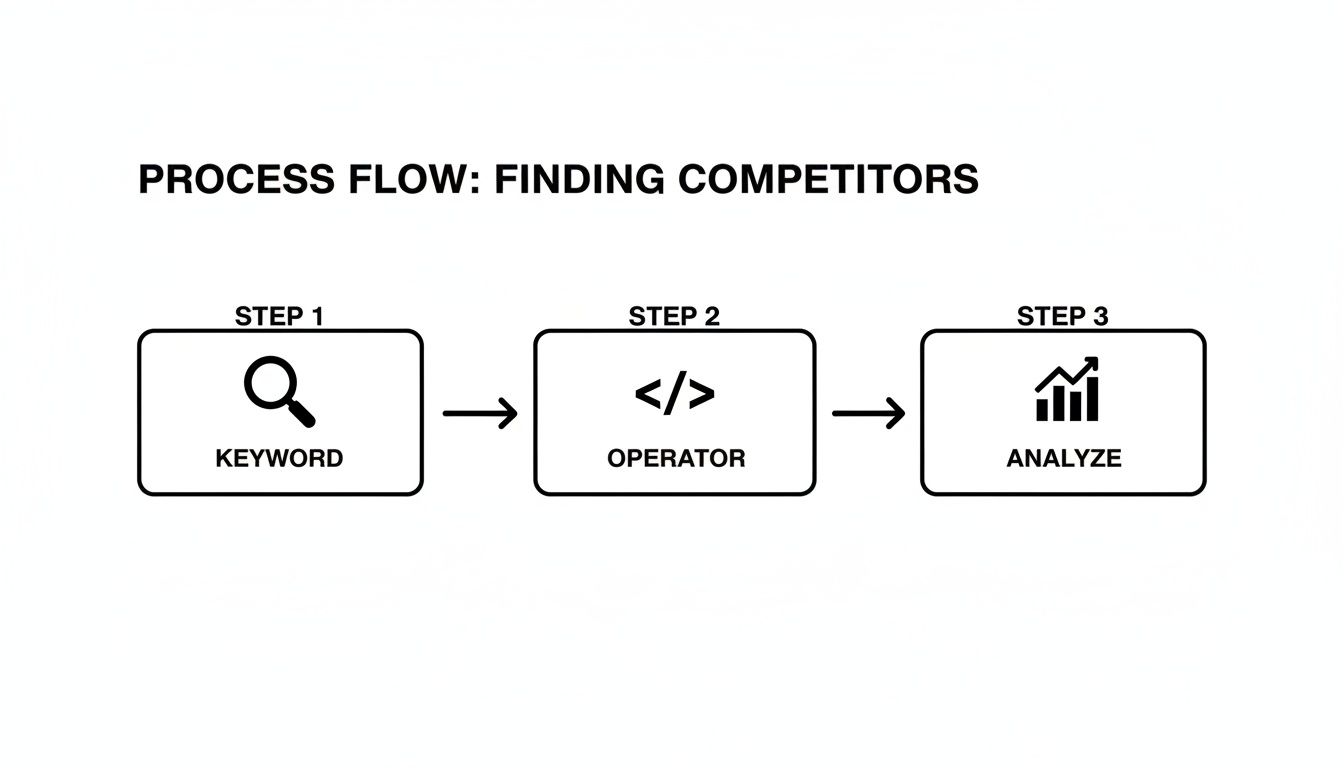
Let's say you search for "commercial convection oven." You're almost guaranteed to see massive marketplaces like Amazon or big-box stores dominate the first page. To find your actual competitors, you can use a negative keyword operator to clean things up.
Try this search instead: commercial convection oven for sale -amazon -lowes
This command tells Google, "Show me pages about commercial convection ovens for sale, but get rid of anything from Amazon or Lowe's." Suddenly, the search results transform into a much more relevant list of specialized suppliers—your true competition.
Here is a quick reference guide to some of the most powerful search commands that can help you pinpoint competitor websites.
Effective Google Search Operators for Competitor Discovery
| Search Operator | Example Usage for Restaurant Equipment | What It Finds |
|---|---|---|
| - (minus sign) | commercial deep fryer -amazon -walmart |
Excludes specific websites from your search results, filtering out large marketplaces. |
| site: | site:competitor.com "ice machine" |
Searches for a specific term only on the website you specify. Great for analyzing a known competitor's product range. |
| related: | related:webstaurantstore.com |
Finds websites Google considers similar to a known major player. |
| " " (quotes) | "heavy duty commercial blender" |
Finds pages that contain that exact phrase, helping you identify competitors targeting specific long-tail keywords. |
| intext: | intext:"restaurant supply" Chicago |
Finds pages that have "restaurant supply" in the body text and are related to "Chicago," uncovering local competitors. |
These operators are your toolkit for turning a broad search into a focused investigation. For a deeper dive, it's worth exploring other strategies to find competitors beyond simple searches to build a complete picture.
Key Takeaway: Using advanced search operators is like putting a filter on the entire internet. It helps you cut through the noise of massive retailers and zero in on the specialized businesses competing directly for your customers' attention and dollars.
Digging Deeper with Digital Tools
Okay, you've used some smart search tactics to pull together a basic list of your competitors. That’s a great start, but now it's time to go from simply knowing who they are to understanding how they win. This is where we shift from discovery to deep analysis, and specialized SEO tools are your secret weapon.
Think of platforms like Ahrefs, SEMrush, or SpyFu as X-ray goggles for your competitors' websites. They let you see past the homepage and right into the engine room, revealing the exact keywords they're ranking for, what content is pulling in traffic, and even the ads they're spending money on.

This is how a simple list of URLs becomes a treasure map of strategic insights, giving you everything you need to build a smarter, more competitive plan.
Uncovering Their Organic Keyword Strategy
First thing's first: what search terms are actually bringing your competitors their customers? Pop a competitor's domain into a tool like Ahrefs' Site Explorer, and you’ll instantly get a list of their top-performing organic keywords.
For a restaurant equipment seller, this is where the gold is. You might discover a major rival is absolutely crushing it with the term ‘ghost kitchen equipment package,’ a specific niche you hadn’t focused on but that has seen a 20% year-over-year search increase. These "keyword gaps" are your biggest opportunities—proven terms with clear buyer intent that you can target with your own product pages or blog posts.
This kind of analysis shows you precisely where to aim your content. In the U.S. commercial cooking gear industry—projected to hit $8.4 billion in 2025—this isn't just nice-to-have information; it's essential for survival. A term like 'commercial food processor' gets around 4,200 monthly searches, and knowing who ranks for it (and why) is a huge advantage.
Analyzing Their Paid Ads
Looking at a competitor’s paid advertising strategy tells you something incredibly valuable: which keywords they believe are worth their hard-earned cash. This is a powerful signal for terms that convert.
Tools like SEMrush can give you a behind-the-scenes look at their pay-per-click (PPC) campaigns. You can see:
- The Keywords They Bid On: Find out their most-prized search terms.
- Their Ad Copy: See the exact messaging they're using to lure in clicks.
- Their Landing Pages: Discover where they're sending all that paid traffic.
This is priceless. If a major competitor is consistently pouring money into ads for "commercial ice machine lease," you can bet that keyword is generating profitable leads for them. You can use that intel to either build your own competing ad campaign or create organic content that intercepts that same high-intent audience.
To take this a step further, learning the ropes of competitive intelligence gathering will help you piece together their entire market strategy. You can also dive into our guide on the best tools for competitor analysis to pick the right platform for your business.
Digging into Backlinks to Uncover Hidden Rivals
A competitor's online strength isn't just about the keywords they show up for on Google. It's also about who's talking about them. Every link pointing to their website is like a digital endorsement, and digging into these backlinks is one of the best ways to find competitors you never knew you had.
Think of it like following a trail of breadcrumbs. By looking at a competitor's backlink profile, you can see exactly which websites are sending them traffic and authority. Are they getting mentioned on popular food industry blogs? Equipment review sites? Local business directories? Each link is a clue that reveals their entire off-page marketing game plan.
This tactic not only helps you identify your true rivals but also gives you a clear roadmap for building your own online authority.
How to Decode a Competitor's Link Profile
A backlink profile is basically a map of a competitor's online network. Using a tool like Ahrefs or Moz, you just plug in a competitor's website, and it spits out a list of every single site linking to them. This isn't just a simple list; it's a strategic goldmine.
Look for patterns. Are they consistently getting links from certain types of sites?
- Industry Blogs: This tells you they're seen as a trusted voice in the restaurant space.
- Product Review Sites: A great sign their equipment is being actively tested and talked about.
- Local Directories: Strong local links mean they have a solid focus on a specific geographic market.
- News Outlets: Mentions here usually point to a well-oiled PR or outreach machine.
This is a critical move in the food service equipment world, a market that's projected to hit USD 59.02 billion by 2032. The biggest players, like Electrolux, build their dominance with thousands of backlinks from authoritative sources. Unlocking this data is a pro move, especially as interest in "compact commercial equipment" grows with the rise of ghost kitchens. You can explore the full food service equipment market report to get a sense of where things are headed.
Turning Your Findings into a Winning Strategy
Okay, so you've got the data. Now what? The websites linking to your competitors just became your new to-do list for link-building targets. If a respected food blogger reviewed their commercial mixer, chances are they'd be open to reviewing yours, too.
Expert Tip: Don't just look at who is linking to them—look at why. Pay close attention to the anchor text in their backlinks. If you see dozens of links with the anchor text "best commercial refrigerators," that's a dead giveaway they are intentionally trying to own that specific, high-value keyword.
This process hands you a proven list of link prospects who are already interested in your industry. It takes the guesswork out of outreach and helps you build a backlink profile that can go toe-to-toe with the big guys. For a more detailed breakdown, check out our guide on how to find sites linking to my site for more practical steps.
7. Look Beyond Google: Dig into Marketplaces and Industry Forums
Let's be honest, Google is just the starting point. Some of your toughest competitors aren't necessarily winning at SEO—they're winning where the money actually changes hands. I'm talking about sprawling online marketplaces and the niche forums where real restaurant owners hang out.
These platforms are where the action is. If you're not poking around major sites like Amazon and eBay, or more specialized restaurant supply hubs, you're missing a huge piece of the puzzle. This is where you can see who's actually moving product, what they're charging, and what real customers think of them. It gives you a direct look into their sales playbook.

This is a critical distinction because it separates SEO prowess from raw sales performance. A seller can absolutely own a category on a marketplace without ever showing up on the first page of Google.
Uncovering Competitors in Marketplaces
Jump onto these platforms and start searching for your main product lines, like "commercial planetary mixer" or "stainless steel prep table." But don't just browse the products—zero in on who is selling them.
Keep an eye out for the top dogs by checking a few things:
- Sales Volume and Reviews: Who’s consistently racking up sales and glowing feedback? That's a direct signal of a competitor you need to watch.
- Brand Stores: A lot of serious sellers set up dedicated storefronts on these platforms. Click through to see their entire catalog and how they present their brand.
- "Frequently Bought Together" Sections: This is a sneaky-good way to find indirect competitors selling complementary gear.
A little bit of this practical digging will quickly give you a hot list of active sellers competing for the same customers you are. From there, you can take their company names and start investigating their main websites and overall online presence.
Key Insight: Marketplaces are basically a self-contained version of our industry. The sellers who do well there have nailed their pricing, product presentation, and logistics. Watching them is like getting a free masterclass on what works for restaurant equipment buyers.
Monitoring Industry Forums and Social Groups
Sales platforms are great, but the real unfiltered opinions are found in industry forums and private social media groups. These are the places where chefs, GMs, and restaurant owners go to ask for real advice from their peers.
You're looking for threads where someone asks, "What's the best commercial fryer for a small cafe?" or "Any recommendations for a reliable ice machine brand?" The companies that get mentioned over and over again with positive comments? Those are your real competitors—the ones who've earned trust and loyalty.
This kind of qualitative feedback is pure gold. It tells you who has the strongest reputation in the trenches, which often matters more than who has the biggest ad spend. When you find competitor websites this way, through genuine word-of-mouth, you know you've found a company that's winning hearts and minds. By keeping an ear to the ground in these discussions, you’ll not only spot your established rivals but also catch the up-and-comers who are gaining traction.
While Google is a powerhouse, limiting your search to traditional SERPs means you're only seeing part of the competitive landscape. The real insights often lie in platforms built for commerce and community.
Competitor Discovery Channels Beyond Search Engines
| Platform | Primary Discovery Method | Key Insights Gained |
|---|---|---|
| Amazon/eBay | Searching for specific product categories and analyzing top seller profiles. | Pricing strategies, sales volume, customer satisfaction (reviews), and product bundling. |
| Specialty Marketplaces | Identifying leading brands and sellers within niche equipment categories. | Niche market leaders, specialized product positioning, and target audience focus. |
| Industry Forums | Monitoring threads where users ask for product or brand recommendations. | Brand reputation, word-of-mouth sentiment, and genuine customer pain points. |
| Facebook/LinkedIn Groups | Observing discussions and polls about equipment and suppliers. | Emerging competitors, common industry challenges, and direct feedback from potential customers. |
Each of these channels provides a different lens through which to view the market. By combining these methods, you get a much richer, more accurate picture of who you're truly up against.
Finding Competitors Through Content and Social Media
The digital battleground isn't just fought on search engine results pages. Your rivals are out there competing for your audience's attention with how-to guides, video walkthroughs, and social media posts. Sometimes, the best way to find competitor websites is to first find who’s creating the most valuable content in your niche.
This shifts the focus from purely technical signals to brand authority. A company that consistently publishes genuinely helpful content is building trust and capturing potential customers long before they’re even thinking about making a purchase. These are the competitors playing the long game, and you absolutely need to know who they are.
Pinpoint Content-Driven Competitors
To find these content powerhouses, you have to put yourself in your customer's shoes. What questions are they asking? They're probably searching for things like "commercial kitchen design tips" or "how to choose an energy-efficient freezer." The websites that consistently show up with detailed, expert answers are your direct content competitors.
A tool like BuzzSumo can be a huge help here. Just plug in a topic, and it will show you the content that's getting the most shares and engagement. The brands behind those articles are the ones capturing your audience's attention.
- Search for high-value topics: Think beyond product names. Look for guides on equipment maintenance, installation checklists, or comparisons between different types of commercial ovens.
- Identify the authors: Take note of the companies and even the individuals who show up again and again as the creators of top-performing content. They are your rivals for your audience's mindshare.
- Analyze their strategy: What formats are working for them? Are they heavy on video, infographics, or long-form blog posts? This tells you a lot about what resonates with your shared audience.
Following this trail uncovers competitors who are masters at brand building and education, not just those who rank for "buy now" keywords.
Uncover Rivals on Social Media
Social media is another goldmine for finding out who's really connecting with your target audience in real-time. Your competitors are on LinkedIn, Instagram, and maybe even TikTok, building communities and showing off their products in action.
The most straightforward approach is to search relevant hashtags. A quick look at #restaurantequipment, #commercialkitchen, or #chefslife will instantly reveal which brands are active and influential in the industry conversation. Make a habit of following these tags.
When you monitor industry hashtags and influencers, you get an unfiltered look at which brands have earned real credibility. If a well-respected chef or kitchen consultant keeps tagging the same equipment supplier, that’s a massive signal of a competitor who has built serious trust.
On that note, start following key industry influencers—from celebrity chefs to respected kitchen designers. Watch who they partner with, tag in their posts, or mention in their stories. These endorsements can expose competitors who are using influencer marketing to build their reputation and reach a much wider audience. It's a great way to find the brands that are winning hearts and minds, not just search rankings.
How to Validate and Organize Your Competitor List
Okay, you've done the digging and now you've got this massive, sprawling list of potential competitors. What's next? It's time to sift through the noise and figure out who actually matters.
Not every website you've flagged is a real threat. The goal here isn't just to have a long list; it's to create a smart, prioritized one that actually helps you build a better strategy.
Let's start by sorting everyone into three buckets. This framework is my go-to for making sense of the competitive landscape and keeps me from chasing ghosts.
-
Direct Competitors: These are your head-to-head rivals. They sell the same kind of restaurant equipment to the same people you do. Think of them as the other players on your home turf.
-
Indirect Competitors: These businesses are solving the same problem for your customer, just in a different way. A classic example is a company leasing commercial kitchen space. They aren't selling ovens, but they are providing a way for a restaurateur to get a kitchen up and running.
-
Tertiary Competitors: This group targets your audience but with a totally different product or service. A restaurant marketing agency or a POS software company fits here. They're in the same ecosystem, but they aren't directly competing for your equipment sale.
Create Your Validation Checklist
Now that you have your categories, you need a quick way to decide who goes where. A simple checklist based on a quick scan of their website and online presence is all you need. You're looking for clear signals that tell you how relevant they are and what kind of threat they pose.
A validated competitor list is the bedrock of a sharp strategy. It forces you to focus your energy on the rivals who can actually teach you something and impact your growth.
Once you have this tiered and organized list, you're ready for the deep dive. This initial sorting process turns a messy spreadsheet into a clear roadmap, showing you exactly who your biggest threats are and where your best opportunities for learning lie.
Our complete guide on how to do SEO competitor analysis will walk you through the next steps, breaking down the specific metrics to track for your top rivals.
Frequently Asked Questions
Figuring out who you're up against isn't a one-and-done task; it’s something you'll revisit constantly. As you get deeper into your market analysis, you'll find the same questions keep coming up. Let's tackle a few of the most common ones I hear from restaurant equipment sellers.
How Often Should I Be Spying on My Competitors?
For a full, deep-dive analysis, I recommend doing it quarterly. The foodservice equipment market moves surprisingly fast. New sellers pop up, old ones pivot, and you don't want to be caught off guard. A quarterly review is your best bet for staying ahead of the curve.
That said, you should be doing quick monthly spot-checks on your top 3-5 direct competitors. Just a quick browse to see if they've launched a new line of convection ovens, redesigned their homepage, or suddenly started pumping out a ton of blog content. These are signals you can't afford to miss.
What if I Can't Find Any Direct Competitors?
It's rare, but it happens, especially if you're in a super-specific niche—think restoring vintage Berkel meat slicers. If you’re searching and coming up with nothing, it’s time to widen your lens.
- Look for Indirect Competitors: Who else is solving the same problem, just in a different way? A business that leases fully-equipped ghost kitchens could be an indirect competitor to someone selling new kitchen packages.
- Search "Shoulder Niches": Peek into adjacent industries. Check out suppliers for craft breweries or high-end bakeries and see who they're buying their stainless steel tables and racks from.
- Analyze International Markets: See who the big players are in the UK or Australia for your specific niche. Their websites and marketing tactics can be a goldmine of ideas you can adapt.
Honestly, having no direct competitors can be a huge opportunity. It might mean you've found a genuinely underserved market where you can build authority and become the go-to source, fast.
Should I Focus on Local or National Competitors?
You need to pay attention to both, but you're watching them for different reasons.
Your local competitors are the ones you're directly fighting for a restaurant owner's business down the street. You have to keep a close eye on their pricing, how they're showing up in local map searches, and what their customer reviews look like. This is your ground game.
Your national competitors are your benchmark for what's possible. Look at their websites to see what a great user experience looks like at scale. Analyze their content strategy, their branding, and how they’ve built a national reputation. They’re a masterclass in what excellence in this industry looks like.
At Restaurant Equipment SEO, we help you turn these insights into a real-world advantage. Our SEO services are built specifically to help you find your competitors and, more importantly, outrank them where it counts. Learn how our strategies can elevate your online presence.