
how to increase restaurant sales with proven strategies
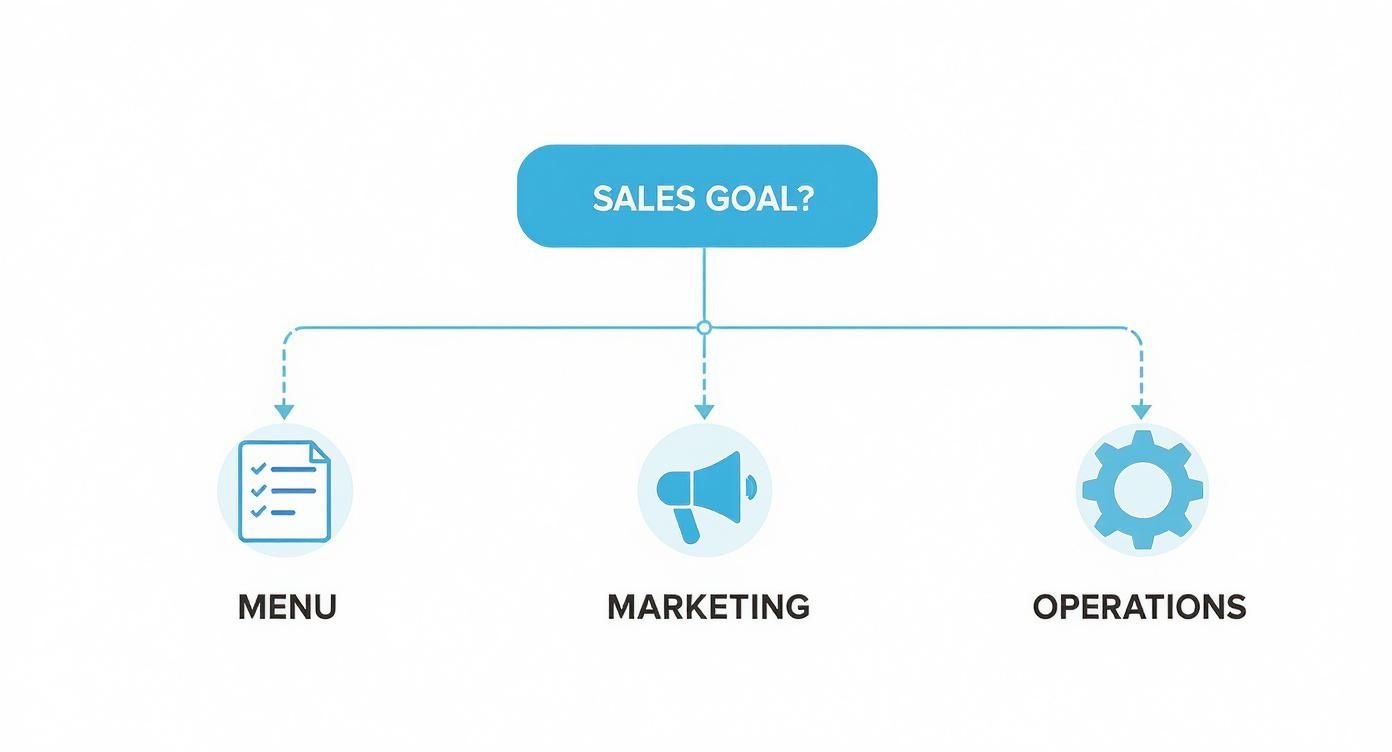
Growing your restaurant's sales isn't about finding a single magic bullet. It’s a combination of smart, deliberate moves across your entire operation. From what I’ve seen work time and again, the real recipe for success blends menu optimization, smart digital marketing, an unforgettable guest experience, and a solid plan for building customer loyalty. When you nail these four areas, small, consistent efforts snowball into major, lasting revenue growth.
Your Game Plan for Increasing Restaurant Sales
Trying to figure out how to drive more sales can feel like a huge task, but it doesn't have to be. The most successful restaurant owners I know don't chase every shiny new trend. Instead, they focus their energy on a handful of core areas that create a powerful, self-sustaining growth engine.
This guide isn't about abstract theories; it’s packed with practical strategies you can put into action right away, whether you run a cozy neighborhood cafe or a high-end bistro. We're getting into the nitty-gritty of what actually works, from the psychology behind a great menu to the marketing tactics that get people in the door. The goal here is twofold: attract more customers and, just as importantly, increase how much they spend and how often they return.
Think of this as your blueprint to:
- Pinpoint and highlight your most profitable menu items.
- Reach new local diners through targeted online marketing.
- Fine-tune your daily operations to serve guests more efficiently.
- Develop loyalty programs that create a dependable flow of repeat business.
Before we dive into the specific tactics, let's look at the big picture. The table below outlines the core pillars we’ll be building on. It’s a quick-glance roadmap showing where to focus your efforts and what kind of results you can expect.
Core Strategies for Boosting Restaurant Revenue
Here’s a snapshot of the main pillars for increasing your sales, along with the key tactics and outcomes for each area.
| Growth Pillar | Primary Tactic | Expected Outcome |
|---|---|---|
| Menu & Pricing | Strategic Menu Engineering | Increased average check size and higher profit margins. |
| Digital Marketing | Local SEO & Social Media Ads | Greater online visibility and more first-time customers. |
| Guest Experience | Operational Efficiency | Faster table turnover and improved customer satisfaction. |
| Customer Loyalty | Targeted Retention Programs | Higher customer lifetime value and predictable revenue. |
With this framework in mind, you can start building a more profitable, resilient business one step at a time. Let's get started.
Engineer Your Menu for Maximum Profitability
Think of your menu as more than just a list of what's cooking in the kitchen. It’s your single most powerful sales tool, working silently to guide customers toward choices that are not only delicious but also fantastic for your bottom line. This whole process is called menu engineering, and it’s a smart mix of psychology, design, and good old-fashioned data analysis.
At its core, menu engineering is about knowing your numbers. You need to look at every single dish and figure out two things: how popular is it (popularity), and how much money do you make on it (profitability)? Once you have that figured out, you can design a menu that practically sells itself.
Identifying Your Menu's Winners and Losers
First things first, you need to sort your dishes into four simple categories. This exercise will shine a light on what’s really driving your profits and what might be holding you back.
- Stars (High Profitability, High Popularity): These are the rockstars. Everyone loves them, and they make you great money. Your job here is simple: keep them front and center and never let the quality slip.
- Plowhorses (Low Profitability, High Popularity): These are the crowd-pleasers that don't add much to your profit margin. You don't want to get rid of them, but you could try bumping the price up just a bit or slightly adjusting the portion size to improve their profitability.
- Puzzles (High Profitability, Low Popularity): These are your hidden gems—highly profitable but for some reason, they aren't selling. They might just need a better description, a more prominent spot on the menu, or a little push from your servers.
- Dogs (Low Profitability, Low Popularity): Let's be honest, these items are just taking up space. Unless there’s a really compelling reason to keep them, it's usually best to let them go.
This classic four-quadrant matrix is the blueprint for this entire process. It gives you a crystal-clear visual of where every item stands.
With this framework, you're no longer guessing. You're making data-driven decisions that have a direct impact on your restaurant's sales.
Designing a Menu That Sells
Once you know which items are your "Stars" and "Puzzles," it's time to get creative with design and language to nudge customers in their direction. A dish that sounds and looks amazing is way more likely to be ordered. That’s why learning how to take food photos that drive restaurant sales can be a game-changer.
Words matter, too. Instead of just "Chicken Breast," try something like "Pan-Seared Chicken Breast with a Rosemary-Garlic Glaze." See the difference? One is a description; the other tells a story.
Placement is also huge. People’s eyes tend to land on the top-right corner of a menu first, so put your most profitable items right there. It's prime real estate.
Smart Pricing and Perceived Value
Pricing is the final piece of the puzzle. It’s not just about covering your costs; it’s about what your customers feel is a fair price for the experience you provide. Interestingly, the gap between fast-food and casual dining prices is getting smaller.
Recent data shows fast-food joints have hiked prices by 4% year-over-year, while casual dining spots have only gone up by 2% to 3%. This actually works in your favor. Customers are seeing better quality and a better experience for only a slightly higher price, making casual dining look like a fantastic value proposition.
This means you can stop competing on price and start focusing on perceived value.
Here are a few simple pricing tricks that work wonders:
- Ditch the Dollar Signs: Studies have shown that removing the "$" from your prices can actually encourage people to spend more. It takes the focus off the cost.
- Use Nested Pricing: Instead of listing prices in a neat column (which encourages people to scan for the cheapest option), tuck the price at the end of the item description in the same font.
- Try Price Anchoring: Place a very expensive item at the top of a menu section. Suddenly, everything else below it looks much more reasonable by comparison.
By combining savvy menu engineering with a smart pricing strategy, you create a powerful system that consistently boosts your sales and pads your bottom line.
Capitalize on High-Growth Cuisine Trends
Think of your menu as a living, breathing thing—not something you write once and laminate forever. If you really want to move the needle on sales, you have to keep your finger on the pulse of what people are genuinely excited to eat right now.
Jumping on a popular food trend doesn't mean you have to ditch your restaurant's identity or confuse your loyal regulars. It’s more about smartly weaving in new flavors and dishes that are getting all the buzz. This is your chance to pull in a fresh wave of curious diners while giving your regulars something new and exciting to talk about. It's a killer way to stay relevant and grab a bigger piece of the pie.
Finding the Hottest Spots in the Market
First things first, you need to know which way the wind is blowing. Every year, market data shows us clear shifts in diner preferences, with certain types of food seeing huge surges in popularity. Keeping up with these changes is how you make smart, profitable decisions for your menu.
A recent industry report made it pretty clear: while the old standbys like burgers and pizza are seeing slower growth, other categories are absolutely taking off. For instance, chicken-focused concepts are projected to see sales jump by 6.9%, Mexican restaurants by 6.2%, and the coffee and beverage scene by a solid 4.4%. These aren't just numbers; they're a massive opportunity. You can get the full scoop on the sales forecast and what it means for restaurants over at Nation's Restaurant News.
Tapping into a trend isn't about blindly following the crowd. It's about meeting your customers where their tastes are heading. A single, well-executed special featuring a trending flavor can create more buzz than a month of your usual marketing.
This data is basically a roadmap to higher revenue. If your concept has the flexibility, leaning into these high-growth areas can be a direct line to a healthier bottom line. For an even deeper dive, check out our guide on current food service industry trends.
Smart Ways to Weave in New Trends
Look, you don't have to blow up your entire menu to get in on the action. The best way to do this is often with small, calculated moves that let you test the waters without taking a huge risk.
Here are a few practical ways I've seen restaurants successfully introduce trending dishes:
-
Limited-Time Offers (LTOs): This is my go-to recommendation. LTOs create urgency and excitement like nothing else. An Italian place could run a "Spicy Chicken Diavolo" for a month. A classic American diner? They could offer a "Birria-Style Short Rib Melt" as a weekend special. It’s low-commitment, high-impact.
-
Fusion Dishes: This is where you can get really creative. Blend trending flavors into your signature dishes. A burger joint could add a killer "Korean Fried Chicken Sandwich" to its menu. A coffee shop could whip up a specialty horchata-flavored latte. It feels authentic to your brand but still attracts the adventurous eater.
-
Special Event Menus: Dedicate a night or a whole week to a popular cuisine. You could host a "Taco Tuesday" with gourmet, inventive tacos that go way beyond the basics, or a "Weekend Brunch" featuring specialty coffees and Mexican-inspired dishes like chilaquiles.
Let's Look at a Real-World Example
Imagine you run a gastropub known for great craft beer and solid American food. You see the numbers showing Mexican cuisine is on the rise. Instead of trying to become a taqueria overnight, you get strategic.
You develop a killer LTO: a "Smoked Brisket Barbacoa Dip" served with freshly fried tortilla chips. Then you put together a flight of local IPAs that you know will pair perfectly with it. You blast it all over your social media with mouth-watering photos.
What happens? You pull in a new crowd that's curious about this unique fusion dish, and your regulars are thrilled to have something new to try. That one LTO boosts not just your food sales but your drink sales, too. That’s the power of a smart, strategic nod to a popular trend.
Fine-Tune Your Operations to Handle More Business
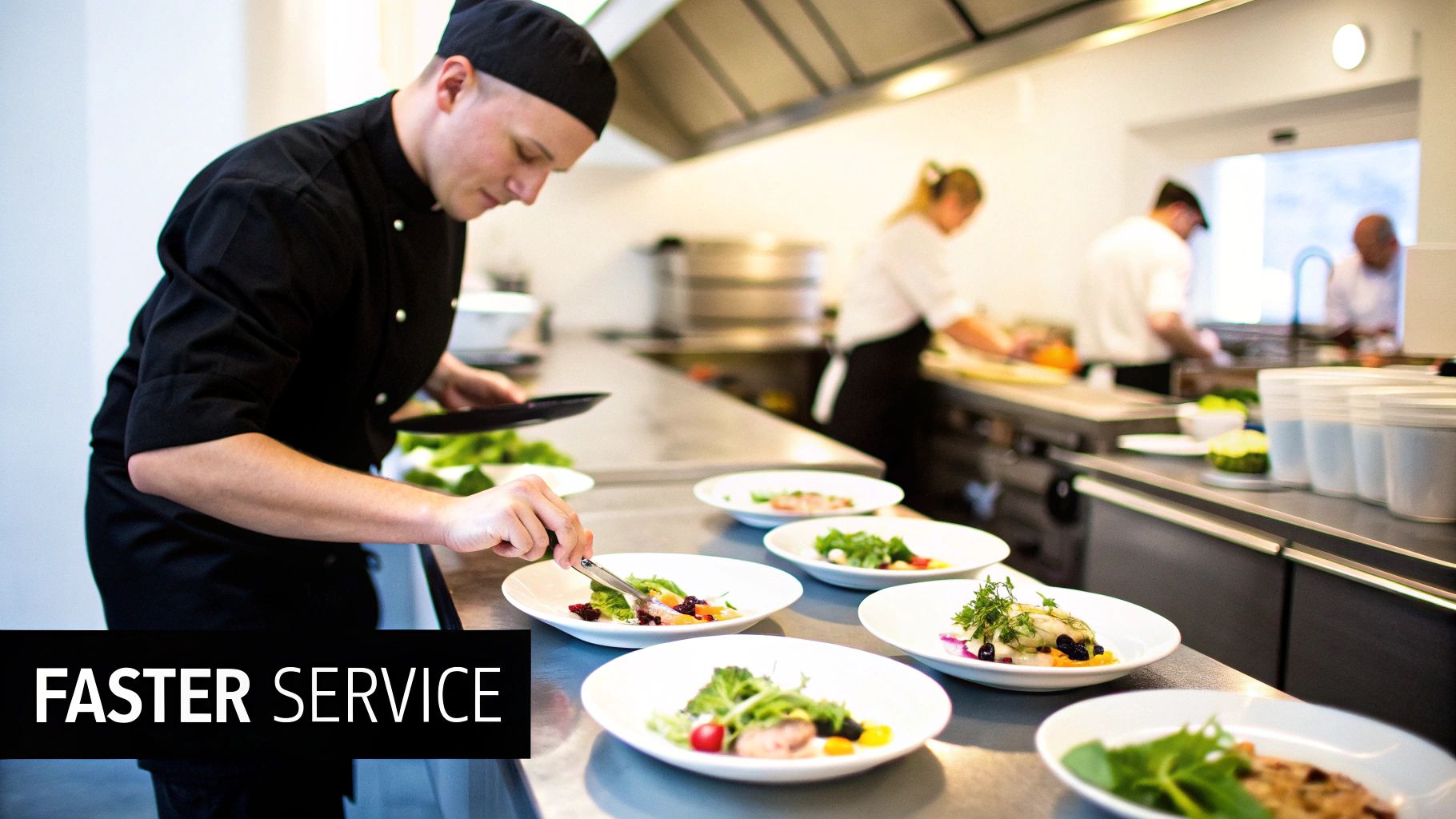
You can have the most incredible menu and a killer marketing plan, but if your internal operations crumble during a rush, you're just leaving money on the table. Operational efficiency is the unsung hero of restaurant profitability. It's all the behind-the-scenes work that lets you serve more guests, turn tables faster, and deliver a consistently great experience that makes people want to come back.
When your kitchen and front-of-house staff are in sync, everything just flows. Orders fly out faster, food hits the table quicker, and guests feel taken care of, not forgotten. This smooth service directly boosts your sales capacity, letting you make the most of those peak dinner hours.
The restaurant world is bouncing back in a big way. In fact, U.S. restaurant and foodservice sales were projected to hit $1.1 trillion in 2024. But here's the catch: profitability is still a major hurdle. The industry's average net profit margin is a razor-thin 3% to 5%. This tells us something crucial—driving sales is only half the equation. You have to pair it with tight operational control to actually see that money in your bank account.
Optimize Your Kitchen Workflow
The kitchen is the heart of your restaurant, and its efficiency dictates the pace of your entire service. A disorganized or poorly planned layout creates bottlenecks that slow down ticket times, which leads to stressed-out staff and hangry customers. Believe me, every second you can shave off in the kitchen improves the guest experience and helps you turn tables.
Take a hard look at your current workflow. Are your prep stations laid out logically? Does a chef have to dodge three other people to get to the walk-in? These little inefficiencies add up fast. A truly great kitchen should run like a well-oiled assembly line, with a natural flow from prep to the line and finally to the pass. For a deep dive, our guide on commercial kitchen design layout has some fantastic insights for creating a more productive space.
Here are a few practical tweaks you can make right away:
- Master Mise en Place: Before service even starts, make sure every station is fully stocked with all the ingredients and tools needed for the shift. This simple discipline stops cooks from having to abandon their post in the middle of a rush.
- Ditch the Paper Tickets: A Kitchen Display System (KDS) is a game-changer. It streamlines communication, helps track ticket times, and cuts down on errors, ensuring every order is fired and fulfilled in the right sequence.
- Cross-Train Your Team: Teach your kitchen staff to work multiple stations. This kind of flexibility is a lifesaver when you're hit with an unexpected wave of customers or find yourself short-staffed.
Use Technology to Supercharge Your Front-of-House
Modern tech can completely transform your front-of-house operations, giving your team the tools to manage the floor with precision. One of the biggest pain points for any diner is waiting for a table. If your seating plan is managed inefficiently, you can easily have empty tables while a line forms at the door.
This is exactly where a table management system proves its worth. These platforms give your host a real-time map of the dining room, letting them give accurate wait times, manage reservations, and seat guests without missing a beat. The result? A significant jump in table turnover, which means more covers every single night.
By using technology to shave just a few minutes off each table turn, a restaurant can potentially serve an entire extra round of guests during a busy weekend shift. It’s a game of inches that adds up to a significant revenue increase.
Beyond seating, other tools can have a massive impact. Think about integrating mobile POS systems that let servers take orders and payments right at the table. This speeds everything up and frees them to focus more on hospitality. Similarly, QR code menus and ordering can cut down on wait times, especially for simple things like drink refills or another round of appetizers.
The table below breaks down how specific tech can solve common operational headaches and directly contribute to your bottom line.
Technology Impact on Restaurant Operations
| Operational Challenge | Technological Solution | Impact on Sales |
|---|---|---|
| Long wait times & inaccurate quotes | Table Management System | Increases table turnover, serving more guests per shift. Reduces walk-aways. |
| Slow ordering & payment process | Mobile POS Systems | Speeds up service, allowing servers to handle more tables efficiently. |
| Order errors & kitchen miscommunication | Kitchen Display System (KDS) | Reduces mistakes and food waste, improves ticket times, and increases guest satisfaction. |
| Overstaffing or understaffing issues | Scheduling Software | Optimizes labor costs based on sales forecasts, ensuring you have the right team for the rush. |
| Inconsistent food quality or portioning | Inventory Management Software | Ensures recipe consistency and controls food costs, protecting profit margins on every dish sold. |
By weaving a smarter kitchen workflow together with the right front-of-house technology, you're not just running a restaurant—you're building a well-oiled machine that's ready to handle more business and drive real growth.
Launch a Modern Restaurant Marketing Strategy
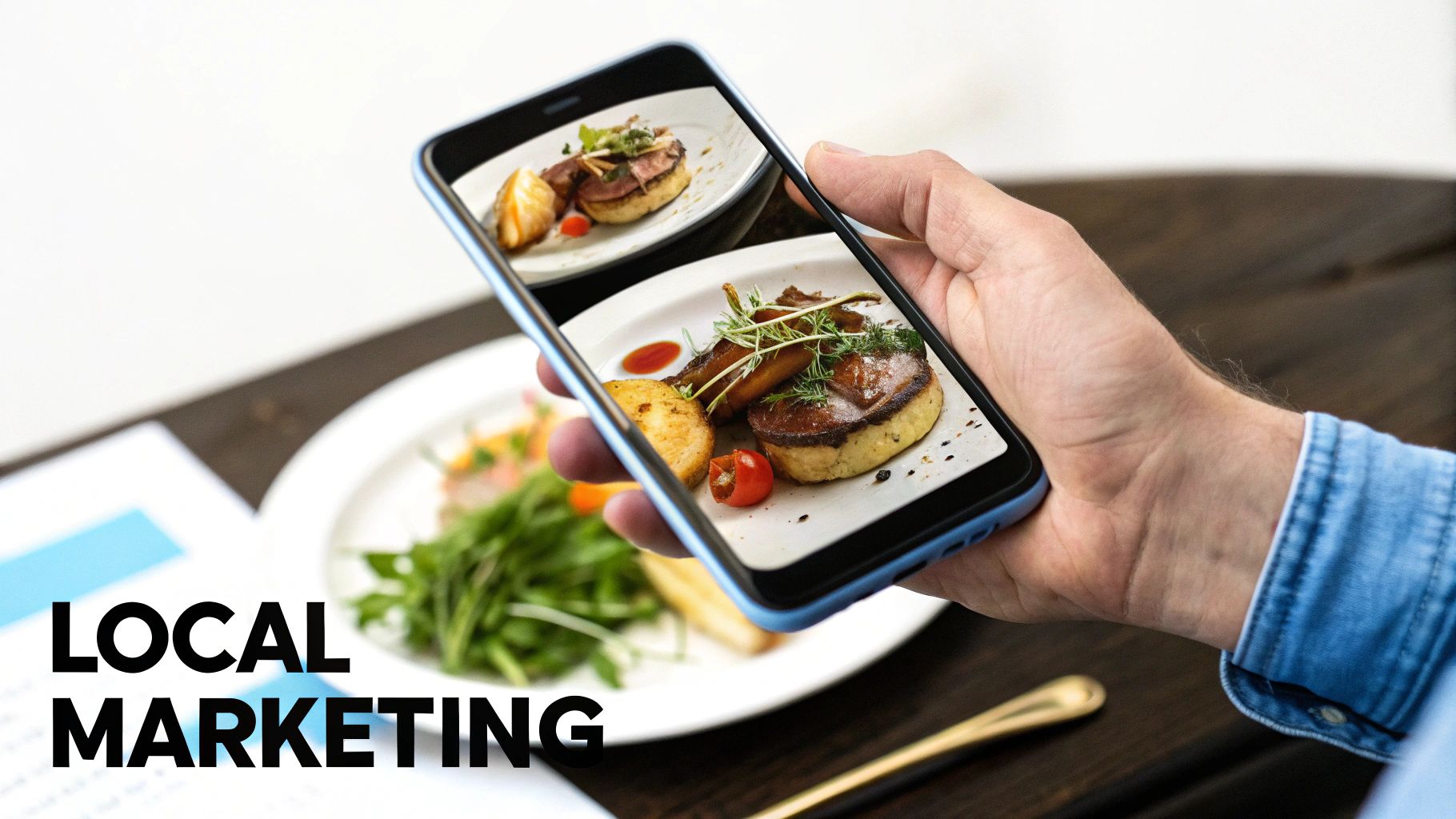
Let's face it: having incredible food isn't enough anymore. If your restaurant doesn't have a solid online footprint, you're practically invisible to today's diners. To get a steady stream of new customers walking through your door, you need a smart marketing machine working for you.
This isn't about just boosting a post here and there. It's about building a real strategy that meets potential customers right where they are—on their phones, searching for a place to eat. Before anyone even smells your kitchen, they've already "visited" you online. Your job is to make that digital first impression unforgettable.
Master Your Google Business Profile
When a hungry local pulls out their phone and types "best tacos near me," you absolutely have to show up. Your Google Business Profile (GBP) is hands-down the most critical tool for grabbing that local search traffic. It’s the digital welcome mat for your restaurant, and the best part is, it's completely free.
An incomplete profile is a huge missed opportunity. You need to put the same love into your GBP as you do your dining room. It goes way beyond just listing your address and phone number.
- Show Off Your Food: Upload stunning, high-quality photos of your signature dishes, the vibe of your restaurant, and your smiling team. Remember, people eat with their eyes first.
- Keep Your Menu Current: Nothing frustrates a potential customer faster than showing up for a dish that's no longer available or finding out the prices are wrong. Keep your online menu spotless.
- Encourage and Engage with Reviews: Gently ask your regulars to leave reviews. More importantly, respond to all of them, good and bad. When people see you engaging, it builds trust. In fact, nearly 80% of customers would rather book directly with a restaurant, and seeing positive, engaged reviews gives them the confidence to do it.
Fine-tuning your GBP is the heart of local SEO, which is all about getting seen in local search results. For a deeper dive, our guide on what is local SEO breaks down how it can be a genuine game-changer. https://restaurantequipmentseo.com/blogs/restaurant-equipment-seo-blog/what-is-local-seo
Run Targeted Social Media Ad Campaigns
Having a great organic social media feed is one thing, but paid ads are how you proactively go out and find new customers. Platforms like Facebook and Instagram have incredibly powerful targeting tools that let you put your most tempting dishes right in front of the perfect audience.
Don’t just run a generic "come visit us!" ad. Get specific. Let’s say you’ve just launched a new happy hour. You can run an ad targeting people who live within five miles of your spot, are between 25 and 45, and have shown an interest in craft beer or cocktails. That kind of precision makes every dollar you spend work harder.
A well-crafted social media ad is like a digital tap on the shoulder to a hungry local. It doesn't just say, "We exist." It says, "We have exactly what you're craving, and we're right around the corner."
Collaborate with Local Food Influencers
Influencer marketing isn't just for massive global brands. Working with local food bloggers and Instagrammers can give you a powerful, authentic stamp of approval that feels more like a friend's recommendation than a stuffy ad. The proof is in the numbers: some studies show 27% of restaurant bookings can be traced back to influencer posts.
My advice? Look for micro-influencers. These are folks with smaller, but hyper-engaged, local followings. A genuine rave from a trusted local foodie can drive more traffic than a big-name celebrity. Invite them for a complimentary meal, show them your best, and let them share their honest experience.
Make Online Ordering Effortless
In a world built on convenience, a clunky or non-existent online ordering process is a deal-breaker. To really expand your reach and meet your customers' expectations, integrating one of the modern online ordering systems is essential.
While third-party apps like DoorDash and Uber Eats give you visibility, their commission fees can be brutal on your margins. The real goal is to get those customers ordering directly from your website.
Here’s a simple but incredibly effective playbook I’ve seen work wonders:
- Use the big apps for discovery. Let new customers find you on the platforms they're already using.
- Convert them to your own system. Slip a small flyer into every delivery bag with a special discount code—"15% off your first order on OurWebsite.com!"
This one-two punch uses the marketing power of the big platforms to fuel your own, more profitable direct sales channel. It's a smart way to build a loyal customer base that comes back to you again and again.
Turn First-Time Guests into Loyal Regulars
Getting a new customer through the door is a tough, expensive battle. The real secret to long-term success? Turning that first-time visitor into a regular who comes back again and again. Your best weapon in this fight is a well-thought-out loyalty program.
It’s all about creating a system that not only rewards repeat business but makes your guests feel genuinely appreciated. We already know that 80% of customers would rather book directly with a restaurant. A loyalty program is that extra nudge they need to skip the third-party apps and stick with you.
Choosing the Right Loyalty Program
There’s no one-size-fits-all answer here. The best loyalty program is one that fits your brand’s personality and what your customers actually want. You don't need a complicated, high-tech app if a simple digital punch card is a better fit for your vibe.
Let's break down the most common options:
- Digital Punch Cards: Think of the classic "buy ten, get one free" card, but on their phone. It’s incredibly simple for customers and a breeze for your staff to manage. This is a fantastic starting point for cafes, pizzerias, and fast-casual spots.
- Points-Based Systems: Here, customers rack up points for every dollar they spend, which they can then cash in for discounts or freebies. This model naturally encourages people to spend a little more each time they visit and works great for restaurants with a diverse menu.
- Tiered Programs: This is a more sophisticated approach. Customers unlock better and better rewards the more they spend, moving up from "Silver" to "Gold" status, for example. Unlocking a new tier could mean priority seating or exclusive tastes of new menu items. It gamifies the experience and makes your top customers feel like true VIPs.
Loyalty is built on more than just points; it's forged through recognition and personalized experiences. Remembering a regular's name or their favorite drink often means more than a 10% discount ever could.
Building Relationships Beyond the Points
A formal program is a great foundation, but true, lasting loyalty is built on human connection. This is where you can empower your staff to create those small, memorable moments that people talk about.
Your POS system is a treasure trove of information just waiting to be used. Train your team to look at the data to recognize familiar faces. Imagine a host greeting a guest with, "Welcome back, Sarah! Your usual table by the window is ready." That simple gesture creates an instant feeling of belonging.
This personal touch should carry over to your marketing, too. Use the information you have to send offers that feel like they were made just for them. Ditch the generic email blasts and try something like, "We noticed you love our calamari. Here’s a complimentary appetizer on us for your next visit." It proves you're paying attention and makes that person feel seen.
At the end of the day, turning a new customer into a loyal regular is about making them feel like more than just an order number. When you combine a smart loyalty program with genuine, personal hospitality, you're not just getting repeat business—you're building a community of fans who will champion your restaurant for years to come.
Got Questions? We’ve Got Answers.
As a restaurant owner, you're always on the lookout for practical ways to get more people in the door and boost your bottom line. Let's tackle some of the most common questions I hear from operators just like you.
What's the Absolute Fastest Way to Increase Restaurant Sales?
If you're looking for a quick win, nothing beats a smart limited-time offer (LTO). An LTO creates a powerful sense of urgency that gets people off the couch and into your restaurant.
Think about a unique, drool-worthy special—maybe a seasonal dish or a creative collaboration. Then, hammer it home with targeted ads on Facebook and Instagram aimed squarely at people in your neighborhood. You’ll be surprised how quickly this can drive immediate traffic.
Another trick that works almost overnight? Run a simple upselling contest with your team. Offer a small prize—a gift card, bragging rights, an extra day off—for the server who gets the highest average check size over a weekend. A little friendly competition can do wonders for your revenue.
How Much Should My Restaurant Really Spend on Marketing?
The classic rule of thumb says to budget 3-6% of your total sales for marketing. But honestly, that’s just a guideline, not a hard-and-fast rule. A brand-new spot trying to make a name for itself will naturally spend more than an established neighborhood institution.
Forget fixating on a specific percentage. What you should obsess over is your Return on Investment (ROI). Pick one channel you can track easily, like Google Ads, and start with a small, manageable budget. See what comes back. If it works, pour more fuel on the fire. If it doesn’t, cut it and try something else.
Should I Lower My Prices to Get More Customers?
Tempting, I know. But lowering prices is a race to the bottom you don't want to run. It can cheapen your brand’s image and tends to attract bargain hunters who will disappear the second your prices go back up. You don't build a loyal following on discounts.
The smarter play is to increase perceived value.
Don’t cut your prices—add more to the experience. People will gladly pay for better ingredients, a more generous portion size, incredible service, or an atmosphere they can’t get anywhere else. Adding value is always a more sustainable path to growth than just slashing prices.
At Restaurant Equipment SEO, we cook up content and SEO strategies that help businesses in the food service industry get found by the right customers. See how we do it at https://restaurantequipmentseo.com.