
What Is an External Link and Why It Matters for SEO
At its core, an external link is just a hyperlink that directs a user from one website to an entirely different one. You might also hear them called backlinks. Think of them as a direct referral from another site—a digital vote of confidence telling search engines that your content is worth checking out.
Deconstructing the External Link

Let’s try a real-world analogy. Imagine the internet is a sprawling city, and your website is a new restaurant that just opened. An external link is like a popular food blogger or a well-respected local business putting up a sign that points to your front door. When a trusted source vouches for you, it tells potential customers—and search engines like Google—that you’re credible and worth visiting.
These "votes of confidence" are a fundamental part of Search Engine Optimization (SEO). They help establish your website's authority and, just as importantly, drive referral traffic. That’s simply the term for visitors who land on your site by clicking a link from another website. To really grasp where these valuable connections come from, it helps to understand what is a referring domain and its role in the whole process.
Anatomy of an External Link
Every external link is built from a few key parts, each with a specific job to do. Breaking them down helps clarify why they’re so powerful.
Here’s a quick summary of the key components that make up an external link.
| Component | What It Is | Why It Matters for SEO |
|---|---|---|
| Anchor Text | The visible, clickable text of the hyperlink. | It gives search engines crucial context about what the linked page is about. |
| Destination URL | The web address of the page being linked to. | This is the target page that receives the SEO "vote" and associated authority. |
| Referring Domain | The website that is hosting the link. | The authority and relevance of this domain largely determine the link's value. |
Knowing these components helps you see a link not just as a click, but as a structured signal that search engines can easily understand.
The Impact on Search Rankings
The influence of external links isn't just theory; it’s backed by cold, hard data. An external link from a quality site is a powerful endorsement that directly affects how high your pages rank in search results.
In fact, one of the most cited statistics shows that pages ranking #1 in Google typically have 3.8 times more backlinks than those in positions #2 through #10. That’s a massive difference, and it clearly shows the direct correlation between links and visibility.
This all comes down to building a web of trust. Earning links isn't just about chasing clicks. It’s about creating a reputation that elevates your entire website, positioning you as a trusted resource in the restaurant equipment space.
How External Links Build Your SEO Authority
External links are more than just clickable text; they're the lifeblood of your website's authority online. The central idea here is link equity, which is essentially a transfer of trust from one site to another. When a well-respected website links out to your content, they're doing more than just sending traffic your way—they're vouching for you.
Imagine a link from a major industry voice like Food & Wine magazine. That’s like getting a personal recommendation from a world-renowned chef. It carries a ton of weight and tells search engines like Google that your content is credible and valuable. Google’s algorithm sees these external links as endorsements, and the bigger the name, the more powerful the stamp of approval.
The Power of Digital Endorsements
This is precisely why link building is a cornerstone of any serious SEO strategy. Every high-quality external link you earn acts as a vote of confidence, signaling to search engines that you're a go-to resource on a particular subject.
For a restaurant equipment supplier, just one link from a top chef’s blog or a major food service trade publication can be a game-changer. It can take you from being buried on page 10 to ranking on page one for competitive keywords like "commercial refrigerators" or "professional kitchen supplies." It’s one of the most reliable ways to build organic visibility that lasts.
An external link from a relevant, high-authority site is one of the strongest signals you can send to Google to prove your content’s value. It’s a direct indicator that others in your industry trust what you have to say.
Why Quality Outweighs Quantity
Don't get caught up in chasing a high number of links. The quality of the website linking to you is what truly matters. A handful of links from relevant, authoritative sites will do more for your search rankings than a hundred links from irrelevant or low-quality ones.
It's a tough reality, but without these powerful connections, most web pages never get found. An estimated 94-95% of all web pages get zero backlinks. The result? They get virtually no organic traffic from Google, leaving them completely lost in the noise.
When considering your long-term strategy, it’s worth looking into the SEO vs. PPC debate. High-quality external links are foundational to SEO, helping you build lasting authority and organic traffic in a way that paid ads simply can't match. Earning these links is how you cement your brand's reputation as a true leader in the food service industry.
How External, Internal, and Nofollow Links Work Together
To really get why external links are such a big deal, it helps to see how they fit in with the other types of links you'll encounter: internal links and nofollow links. Each one has a specific job in guiding both your visitors and the search engine bots that crawl your site.
Think of your website as a city. An external link is like a major highway leading from another, well-respected city directly to yours. It brings in new traffic and, more importantly, signals to everyone that your city is a place worth visiting.
An internal link, on the other hand, is like a local road or street sign within your own city. It helps people get from your blog post about choosing the right commercial oven to the actual product page for that oven, keeping them exploring what you have to offer.
So, What’s a Nofollow Link?
Then you have the nofollow link. This is like a private road with a "No Thru Traffic" sign posted just for search engines. People can still use the road to get to the destination, but it tells Google not to pass along any of your city's credibility or "link equity."
You’ll typically see these used for paid advertisements, links in comment sections, or any content you don’t fully endorse. It's a way to link out without giving away your hard-earned authority.
This image really drives home how that authority flows. When a big, trusted website links to you, it's essentially giving you a vote of confidence that boosts your own reputation in Google's eyes.
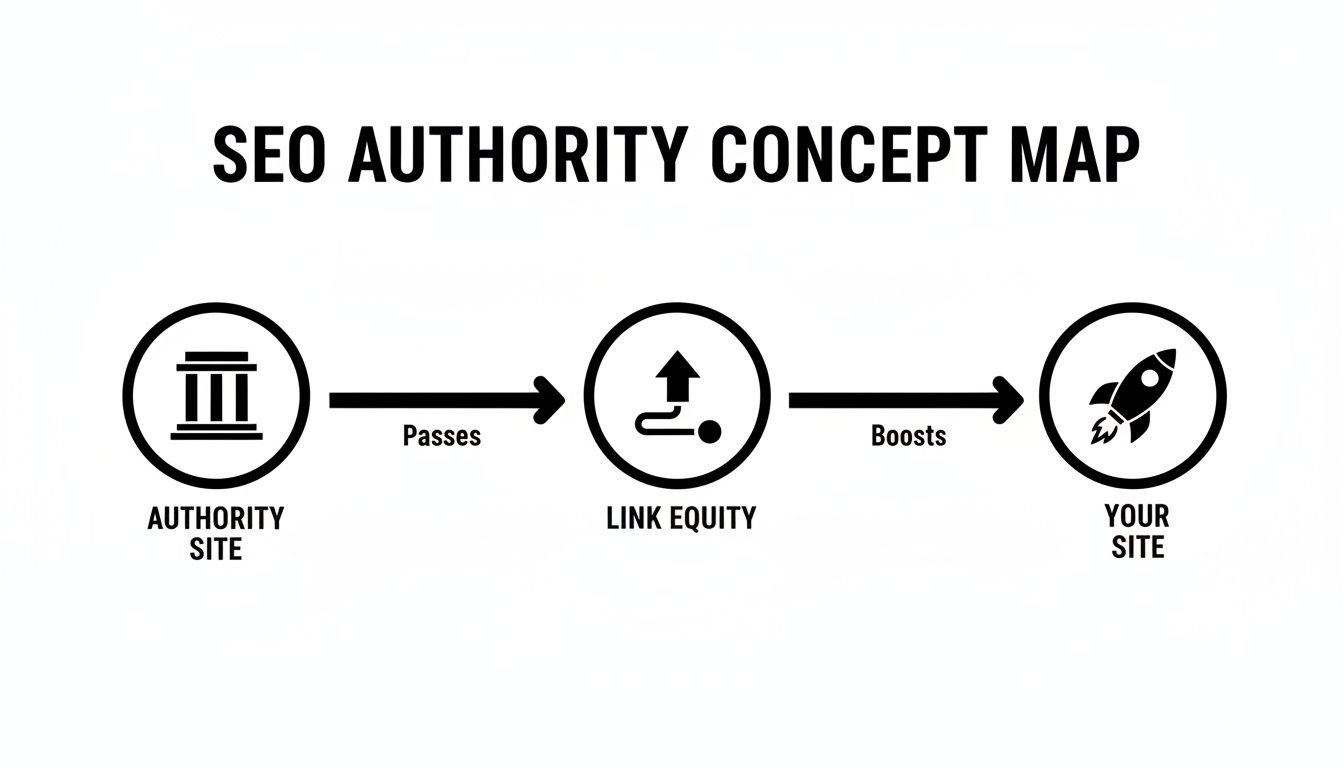
As you can see, getting links from domains that Google already trusts is a direct way to build your own site's credibility and climb the search rankings.
Link Type Comparison Guide
Knowing the difference between these links isn't just theory—it’s the key to building an SEO strategy that actually works. Each link sends a unique signal to search engines and serves a different purpose for your website visitors.
This simple table breaks down their core functions and impact.
| Link Type | Primary Purpose | SEO Impact |
|---|---|---|
| External Link | To cite sources, provide value, and connect your site to the wider web. | High. Passes authority (link equity) to the linked-to site, acting as a powerful ranking signal. |
| Internal Link | To guide visitors through your own website and spread authority across your pages. | Medium. Helps search engines map your site structure and improves user engagement metrics. |
| Nofollow Link | To link to a site without passing on any SEO authority, often for paid links or untrusted content. | Low. Instructs search engines not to count the link as an endorsement, which helps avoid penalties. |
The main thing to remember is that not all links are created equal. Both external and internal links are your primary tools for building authority, while nofollow links are more of a safety valve to keep your site's link profile clean.
Putting this into practice is straightforward. When you're writing a new blog post, use internal links to point readers toward your own product pages or related articles. When you mention an industry study, use an external link to cite that reputable source, which adds credibility to your content.
By default, links are "dofollow" and pass authority—which is exactly what you want when building your SEO. To get a better handle on this, check out our guide on the importance of do-follow backlinks. Once you master all three link types, you have complete control over your site's authority and how users navigate it.
Proven Strategies for Earning High-Quality Links
Okay, so you get what an external link is and why Google cares so much about them. Now, let’s get our hands dirty and move from theory to action. We're going to cover practical, ethical ways to get links that actually move the needle for your restaurant equipment business.
Forget the risky shortcuts. The real goal is to earn links by becoming an indispensable resource that people in the food service industry genuinely want to reference. Think of it like building your professional network online—every quality link is another valuable connection that boosts your reputation.
Create Link-Worthy Content
The single most sustainable way to get links is to create content so good that other websites have to talk about it. This is the heart of modern link building. You want to become a link magnet, not a link chaser.
For a restaurant equipment supplier, this could look like:
- In-depth Guides: Think bigger than a simple blog post. An "Ultimate Checklist for Opening a New Restaurant" is a perfect example. New restaurateurs will bookmark it, and industry blogs will happily link to it as a go-to tool for their readers.
- Original Data or Research: Why not run a survey on the most durable commercial refrigeration brands? Or analyze the energy consumption trends of modern combi ovens? Unique data is a goldmine for links because journalists and bloggers are always looking for fresh stats to cite.
- Detailed Product Comparisons: Create a comprehensive showdown between two popular commercial convection ovens. Don't just list specs—include performance tests, photos, and clear recommendations for who should buy which.
The principle is simple: solve a problem or answer a question so thoroughly that your content becomes the definitive source on the topic. When you pull that off, the links start coming to you.
Build Relationships Through Strategic Outreach
Once you have a fantastic piece of content, you can't just expect people to find it. You need to let the right people know it exists. That’s where outreach comes in, and I don't mean spamming a hundred inboxes with a generic template. This is about building real relationships with key players in your industry.
Guest Posting
Guest posting is a classic for a reason. You write a genuinely helpful article for another website in your niche—like a popular chef's blog or a restaurant management publication. You give them great content for their audience, and in return, you get an author bio with a link back to your site. A single, well-placed guest post on an authoritative site can send a powerful signal to Google and drive highly relevant traffic your way.
Supplier Directories and Mentions
Getting your business listed in reputable online directories for the food service industry is another fantastic tactic. Beyond general directories, look for opportunities to get featured in roundup articles like "Top Commercial Kitchen Suppliers in Chicago" or "Where to Buy the Best Restaurant Equipment Online." These mentions almost always come with a valuable external link.
There's a reason link building is a core pillar of any serious SEO plan. In fact, 68% of marketers consider it their most important SEO tactic, even more so than content creation itself. The numbers back it up, with a potential ROI of 200-400% over 12 months for commercial keywords. If you're curious, you can discover more insights on link building statistics to see the full picture.
These methods transform link building from a tedious chore into a relationship-building exercise. For more advanced strategies, we've put together a detailed guide on effective link building programs designed specifically for the restaurant supply industry.
How to Spot a High-Quality External Link
One of the biggest lessons you'll learn in SEO is that not all links are created equal. A backlink from a random, brand-new blog just doesn't have the same punch as one from an established voice in your industry. Learning how to tell the difference helps you chase opportunities that actually move the needle and avoid the ones that could hurt your rankings.

Think of it like getting a referral for your business. A glowing recommendation from a successful, well-respected chef means a whole lot more than a random shoutout from someone who's never set foot in a commercial kitchen. Search engines view links in much the same way, using specific clues to judge their quality.
Putting in the effort to get good links really pays off. Research shows that a single high-value backlink can improve rankings by +1.5 positions on average, with a lifetime value estimated between $300 and $1,000. If you're interested in the data, you can explore more link building statistics on BacklinkGrid.com.
What to Look For: The Three Core Quality Signals
When you're sizing up a potential backlink, you can cut through the noise by focusing on three main things. These are the pillars of a strong link.
- Website Authority: How reputable and trustworthy is the site linking to you? A link from a major trade publication like Restaurant Business Magazine is a heavyweight endorsement. A link from an obscure, brand-new blog? Not so much. SEO tools can give you a score for this, often called Domain Authority or Domain Rating.
- Topical Relevance: Does the website's topic make sense for your business? For a restaurant equipment supplier, a link from a culinary school's blog is a perfect match. On the flip side, a link from a website about dog grooming is completely irrelevant and won't help your SEO at all.
- Anchor Text: This is the actual clickable text in the hyperlink. Well-chosen anchor text like “best commercial ice machines” tells Google exactly what the destination page is about. Vague text like "click here" or "read more" is a missed opportunity.
A link is only as strong as the website it comes from. Prioritizing links from high-authority, topically relevant sites with descriptive anchor text is the most effective way to build a powerful backlink profile that drives real results.
A Practical Checklist for Evaluating Links
So, how do you put this into practice? A great starting point is to see where your competitors are getting their best links—you can use various SEO platforms for this. Once you have a list of potential websites to target, run them through this quick quality check:
- Credibility Check: First, visit the site. Does it look professional? Is it publishing high-quality, original content? Does it seem to have a real audience and social media engagement?
- Relevance Check: Next, confirm its connection to the restaurant equipment world. Is it a food blog, a chef's resource site, or a hospitality industry publication?
- Anchor Text Potential: Finally, think about what kind of anchor text would naturally fit on that site. Could they realistically link to your product page using a relevant keyword?
This simple process helps you focus your energy on links that will genuinely boost your rankings. If you want to dig deeper, our guide on how to find all the sites linking to your website can give you a complete picture of your current backlink profile.
Your Top External Link Questions, Answered
As you start getting serious about SEO, you'll find that external links bring up a lot of questions. It's totally normal. Let's tackle some of the most common ones I hear from business owners and marketers, so you can move forward with confidence.
How Many External Links Do I Actually Need?
Everyone wants to know the magic number, but the truth is, there isn't one. The golden rule here is quality over quantity, every single time. A few solid, relevant links from well-respected industry blogs or publications will do more for you than hundreds of junky links from sites that have nothing to do with your business.
Sure, if you look at the top-ranking pages, they often have a lot of backlinks. But they didn't get them overnight. Instead of chasing a number, focus on a steady, consistent effort to earn good links. That's how you build real authority that search engines trust for the long haul.
Is It Okay to Just Buy Links and Get It Over With?
I get the temptation, but the short answer is a hard no. Buying links specifically to try and game the system is a major violation of Google's rules. Think of it as a high-stakes gamble where you could lose everything—Google can slap you with a penalty that makes your website practically invisible in search results.
The only sustainable way forward is to earn your links. You do this by creating content people genuinely want to share, building real relationships in the restaurant world, and being a valuable resource. It's an investment, but it's one that pays off in both rankings and reputation.
The potential damage to your brand's credibility just isn't worth the shortcut. Stick to ethical, white-hat strategies that build a rock-solid foundation.
How Long Until I See Results From New Links?
SEO is a marathon, not a sprint, and that's especially true for link building. After a new link goes live, it can take anywhere from a few weeks to several months for search engines to even find it, figure out how valuable it is, and let that value start to influence your rankings.
Patience is your best friend here. Think of it like building a great reputation in the real world—it doesn't happen with one conversation. Each high-quality link you earn is like another solid handshake, another positive referral. Over time, these efforts compound and lead to serious, lasting growth. Don't get discouraged by the wait.
What's This "Anchor Text" Thing and Why Does It Matter?
Anchor text is simply the clickable text you see in a link. It might seem small, but it’s a huge deal because it tells both people and search engines what they're about to see.
Think about it. Which of these links is more helpful to Google?
- A link that says "click here"
- A link that says "energy-efficient commercial ovens"
The second one gives Google a crystal-clear signal about the topic of the destination page, helping it rank for the right terms. A healthy backlink profile won't have the exact same anchor text over and over. Instead, it will have a natural mix, including:
- Keyword-focused text (like "commercial refrigerators")
- Branded text (like your company's name)
- Generic text (like "read more" or "visit their website")
This variety looks natural and helps build a strong, penalty-proof SEO strategy.
At Restaurant Equipment SEO, building these powerful connections is what we do best. Our link-building services are all about earning high-authority, relevant backlinks that drive real, measurable growth for your business.
Take the next step in dominating your market