
Local Link Building for Equipment Sellers
Local link building is all about getting backlinks from websites in your own backyard. For a restaurant equipment seller, this isn't just a "nice-to-have" SEO tactic; it's how you prove you're a real, active player in your city's food scene. When you get links from local food blogs, suppliers, or community event pages, you're sending a powerful signal to search engines that you belong. It’s a direct way to tell Google you should be at the top when local chefs and restaurateurs are searching.
Why Local Links Are Your Secret Ingredient
In the hyper-competitive market of restaurant equipment sales, your website is your digital showroom. But if no one can find it, it might as well be on a deserted street. Local link building is what paves the main road straight to your door, putting you directly in front of qualified buyers in your service area.
Think of every local backlink as a personal recommendation. When a respected local food blogger, a nearby commercial kitchen designer, or a city-wide culinary festival links to your site, they're essentially vouching for you. Google sees these digital handshakes and rightly concludes that you're a credible and important resource for the local community.
Moving Beyond Generic SEO
This isn't a numbers game of collecting hundreds of flimsy links from random online directories. The real magic is in relevance and context. A single, well-placed link can drive more actual business than you might think.
Let’s paint a picture. A popular food blogger in your city writes a rave review of a new bistro that just opened downtown. In that article, they gush about the restaurant's state-of-the-art kitchen and drop a link to your website as the supplier of their high-efficiency pizza ovens.
That one link just hit a home run. Here’s why:
- It Drives Qualified Traffic: The blogger's audience is a goldmine of local food lovers, chefs, and aspiring restaurateurs—your exact target customer.
- It Builds Trust and Authority: An endorsement from a trusted local voice gives your brand instant credibility that money can't buy.
- It Boosts Local Rankings: Google's algorithm connects the dots—the geographic and topical relevance—and bumps you up for searches like "commercial pizza ovens in [Your City]."
The power of a single, contextually relevant local link cannot be overstated. It transforms your website from a simple online catalog into a recognized fixture of the local culinary industry, attracting customers who are actively looking to buy.
The Growing Importance of Local SEO Signals
I'm not the only one saying this; the industry has woken up to the impact. Recent industry data shows that financial investment in these strategies is on the rise, with 61% of marketers planning to increase their link-building spend through 2025.
Even more telling for local businesses like yours, 71% have already put dedicated local link-building strategies into practice. This isn't some fringe tactic anymore; it's a core component of a smart marketing plan. You can dig into these link building statistics and trends to get the full story.
Ultimately, a smart local link-building strategy is about connecting your online presence to real-world business results. You’re building relationships, showing you're invested in the community, and proving to both Google and your future customers that you are the go-to equipment supplier in your area. The payoff isn't just better rankings; it's more quote requests, more showroom visits, and more deals with the restaurants shaping your city's food scene.
Before you can even think about landing a splashy feature in a local food blog or sponsoring the town's chili cook-off, you need to get your house in order. Your digital house, that is. The absolute bedrock of any local SEO strategy is built with local citations, and without this solid foundation, any other links you build will be on shaky ground.
Think of citations as online mentions of your business's core details: Name, Address, and Phone number (what we call NAP). When Google crawls the web and sees your exact NAP listed consistently across dozens of reputable directories, it gives the search engine confidence. It's a powerful signal that says, "Yes, Citywide Restaurant Supply is a real, operational business right here at this address."
Consistency is the name of the game here. It's not just important; it's everything. A tiny difference—like having "St." on one site and "Street" on another—creates a crack in your foundation. These little discrepancies confuse search engines and can absolutely tank your local rankings.
Why NAP Consistency Is Everything
Picture this: you give two delivery drivers slightly different addresses for the same restaurant. They might get there eventually, but it’s going to cause confusion, delays, and frustration. That's exactly how search engines feel when they find inconsistent NAP data for your business.
That bit of uncertainty is all it takes for Google to favor a competitor with a cleaner, more consistent online presence over you. Every single inconsistency, no matter how small, erodes trust. Your goal is to patch up all those cracks and present one, unified, authoritative identity to the world.
The core principle of citation building is simple: accuracy builds authority. Every correct mention of your business reinforces its legitimacy and geographic relevance, making it easier for Google to rank you for valuable local searches.
Auditing Your Existing Online Footprint
Chances are, your business already has citations scattered across the web. You might not have even created them yourself—data aggregators are notorious for scraping and spreading business info, which means outdated or incorrect listings can multiply without you ever knowing. The first real step is to see what's already out there.
You can start with some simple Google searches. Try looking up:
- "Your Business Name" + "Your City"
- "Your Business Name" + "Your Old Address"
- "Your Business Name" + "Incorrect Phone Number"
Get a spreadsheet going and log every citation you find. Make columns for the business name, address, phone number, and website, and highlight any inconsistencies you discover. Once you've mapped out your existing footprint, you can start the cleanup. This involves manually updating every incorrect listing and claiming any profiles you don't already own. It's tedious work, but our complete guide to building local citations breaks down the auditing process in much more detail.
Beyond the Basics: Essential Directories
Getting your business listed on Google Business Profile, Yelp, and Apple Maps is table stakes. But for a restaurant equipment seller, you can't just stop there. You need to be listed where your customers and peers are. Niche-specific and B2B directories carry a ton of weight because they scream "industry relevance" to search engines.
Here's a look at the types of citation sources you should be prioritizing.
Essential Local Citation Sources for Equipment Sellers
We’ve categorized the most important citation and directory types to help you focus your efforts where they'll have the biggest impact.
| Citation Category | Examples | Impact Level | Action Item |
|---|---|---|---|
| Core Aggregators | Data Axle, Neustar Localeze | High | Get your core business data correct here first. These services feed hundreds of other directories, so accuracy is critical. |
| Top-Tier Directories | Google Business Profile, Apple Maps, Yelp, Bing Places | High | Claim and fully optimize these profiles. Don't just list your NAP; add photos, hours, and detailed service descriptions. |
| Industry-Specific | Foodservice Equipment Distributors Association (FEDA), local restaurant association directories | Medium | Hunt down memberships and listings in trade-specific portals. This is a massive signal of your industry authority. |
| Local B2B Networks | Local Chamber of Commerce, city business directories, Better Business Bureau | Medium | Getting listed on these platforms cements your status as a trusted, active member of the local business community. |
By building out your presence across these platforms, you’re not just listing a business—you're weaving a dense, interconnected web of accurate information. This foundational work is the non-negotiable first step in any local link building campaign, and it makes every single link you earn from here on out that much more powerful.
Turn Your Business Relationships into Backlinks
Some of your most powerful local link-building opportunities are hiding in plain sight. They’re buried within the business relationships you already manage every single day. You don't always need to chase down brand-new prospects; often, the best links come from a simple ask to your existing partners and suppliers.
Think about the ecosystem your business lives in. You’re constantly working with commercial kitchen designers, food distributors, HVAC specialists, and restaurant consultants. Every one of these businesses has a website, and a link from them is a highly relevant, contextual nod that Google absolutely loves.
Leverage Your Complementary Business Network
There's a reason they say your network is your net worth, and that's especially true for local SEO. The goal here is to turn professional courtesy into real, measurable SEO value.
Start by making a list. Who do you work with locally? Jot down all the businesses that aren't direct competitors but serve the same person you do: the restaurant owner. These partnerships are a goldmine because a link between you helps both parties. A kitchen designer can feature a project on their blog that used your equipment, linking straight to your product page. In return, you can create a "Trusted Partners" page on your site and send a link their way.
A backlink from a complementary local business is more than just a link. It's a digital referral that tells search engines you are an integral and trusted part of the local restaurant industry's supply chain.
One of the best ways to get these opportunities rolling is to actually show up. Attending local business networking events can make the eventual digital "ask" feel much more natural. A little face time goes a long way.
Once you have a list of partners, it’s time to reach out. But because you already know them, a cold, formal email is the last thing you want to send. Keep it casual, personal, and frame it as a win-win.
Here’s an idea of what that might look like—no rigid template needed:
- Subject: Great working with you on the [Restaurant Name] project!
- Body: "Hey [Partner Name], I was just updating our website and thought it would be great to feature some of our recent collaborations. The [Project Name] kitchen turned out amazing. Would you be open to us writing a short case study about it for our blog, where we’d of course link to you as the designer? Let me know!"
Unlock Your Supplier and Vendor Links
This is one of my favorite, most overlooked sources for high-authority links: the brands you sell. National manufacturers of commercial ovens, refrigerators, and dishwashers almost always have a "Where to Buy" or "Find a Local Dealer" page on their corporate website. Getting your business listed here is a massive win.
These links are incredibly valuable for a few key reasons:
- High Authority: The manufacturer's site almost always has a much higher Domain Authority than a typical local business.
- Extreme Relevance: The link comes from the company that makes the products you sell. It doesn’t get more contextually relevant than that.
- Minimal Effort: You’re already an authorized dealer. The only barrier is often just a simple, well-phrased request.
Your first step is to audit the websites of every major brand you carry. Hunt for those locator pages. If you're not on the list, find the contact info for their marketing team or just hit up your regional sales rep.
The infographic below really helps visualize how these different types of links build on each other to create a rock-solid local presence.
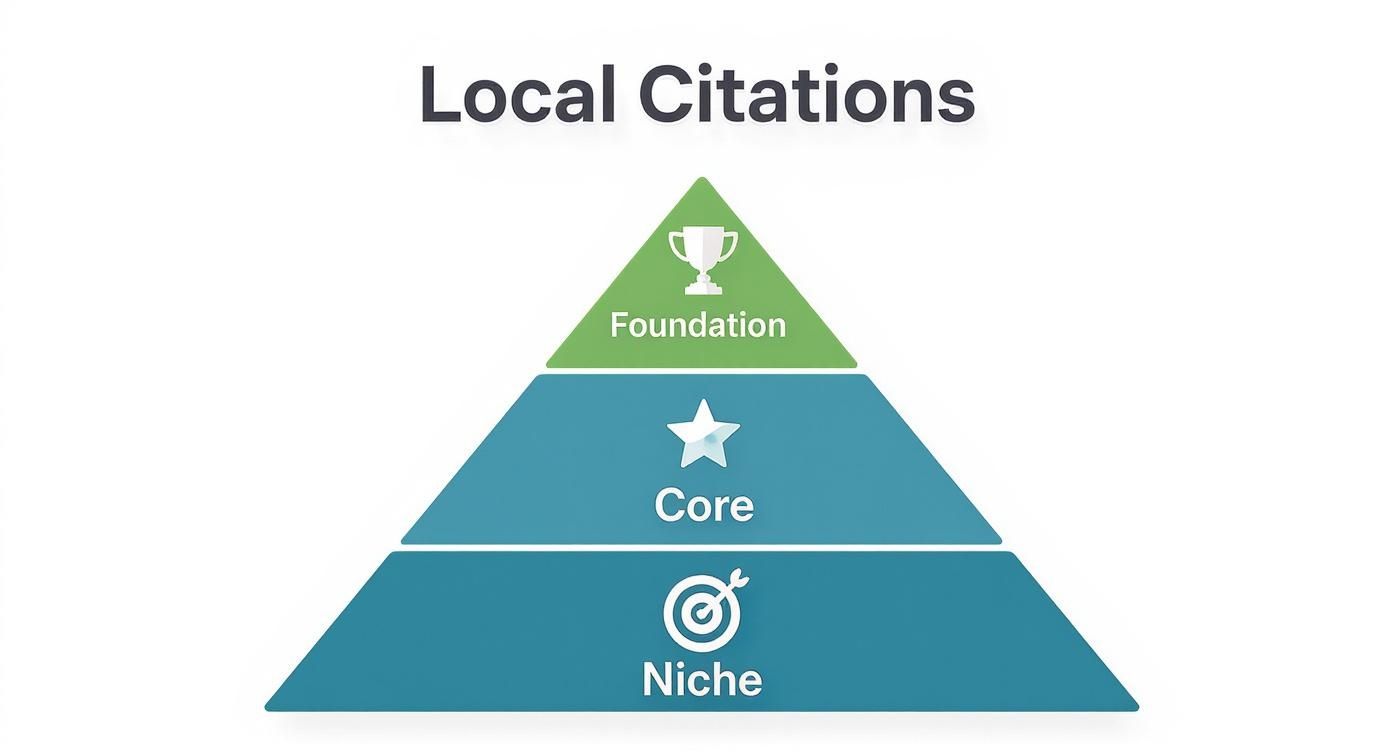
As you can see, once you've laid a good foundation, going after these core and niche links—like those from suppliers and partners—is the logical next move to build real authority.
When you reach out, be direct. Make their job easy by providing all the necessary information upfront. Make sure your NAP (Name, Address, Phone) is perfectly consistent with your official business details. A sloppy, incomplete request is the fastest way to get your email deleted.
For those looking to take their partnership outreach to the next level, it's worth exploring more advanced tactics. To go deeper on one of these strategies, check out our guide on how to approach guest posting on blogs within our industry. It's a great way to open doors to an even wider network.
By systematically working through your existing business contacts—from the local designer you just worked with to the national brands on your showroom floor—you can build a powerful backlink profile. It's an efficient and effective strategy that cements your position as a key player in your local market.
Earn Links Through Community Sponsorship
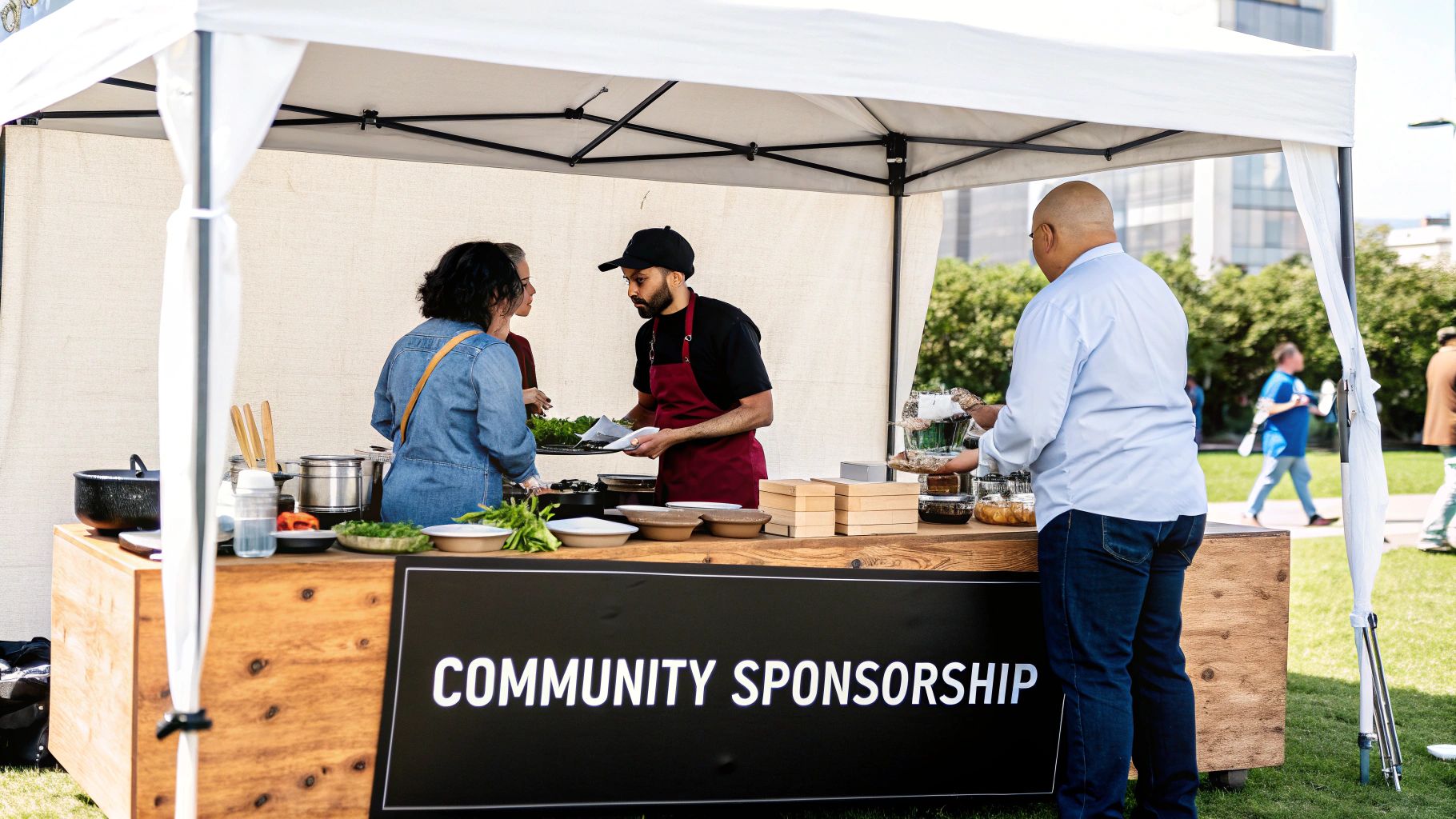
Getting involved in your local community is about so much more than just goodwill. It's a goldmine for earning some of the most powerful and authentic backlinks you can get. When you sponsor local events, you shift from being just another supplier to becoming a true pillar of the local food scene. That kind of active involvement is exactly what generates the high-quality links that give your local SEO a serious boost.
Stop thinking of sponsorship as an advertising expense. Instead, reframe it as a core piece of your local link building strategy. When you support an event, you aren't just paying to get your logo on a banner—you're earning a prime spot on a high-traffic, geographically relevant website that Google loves.
Identifying the Right Sponsorship Opportunities
The trick here is to be selective. Your goal is to find events where your brand's presence feels completely natural and genuinely valued. This way, the backlink you get isn't just powerful; it also sends relevant referral traffic from potential customers who are already plugged into the local culinary world.
You need to look for events that directly align with your industry and clientele. Think beyond the generic city-wide festivals and really dig into the local food ecosystem.
Here are a few prime opportunities I always look for:
- Local Food Festivals and "Taste of" Events: These are basically magnets for restaurant owners, chefs, and dedicated foodies. Sponsoring a main stage or a tasting booth puts you right in the middle of your target audience.
- Culinary School Competitions or Fundraisers: What better way to build your brand than by supporting the next generation of chefs? A link from a local culinary institute's website is incredibly authoritative.
- Restaurant Association Galas or Awards: Getting your name on an award for "Best New Restaurant" or "Chef of the Year" puts you in front of the city's top talent and decision-makers.
- Farmers Market Events: Many markets host special events like chef demos. Sponsoring one of these is an easy win for visibility and a super-relevant backlink.
Don’t just write a check and walk away. The most effective sponsorships are true partnerships. Get involved. Offer to lend equipment for a demo kitchen or have your team on-site to chat with people. This deepens the relationship and makes that backlink even more meaningful.
Securing the Backlink in Your Sponsorship Agreement
This is where you can't drop the ball. A sponsorship without a backlink is a huge missed SEO opportunity. When you're negotiating the sponsorship package, make it clear that a do-follow link from their website is a non-negotiable part of the deal.
You have to be specific about what you want. Event organizers are usually swamped and might not be thinking about the SEO side of things. It's up to you to guide them.
Your sponsorship checklist should include:
- A Link on the "Sponsors" or "Partners" Page: This is the absolute minimum. Make sure it's a clickable logo or a text link with your business name.
- Specific Anchor Text: If you can, ask them to use your business name as the anchor text (e.g., "Citywide Restaurant Supply"). This is great for reinforcing your brand with search engines.
- Mentions in Event-Related Blog Posts: Ask for a link in their pre-event promotion or post-event wrap-up articles. This feels more natural and can drive clicks.
Thinking Beyond Traditional Sponsorships
You don't always have to wait for an event to come to you. Why not create your own link-worthy community initiatives? This positions you as an industry leader and can generate organic media attention, leading to even more backlinks from news outlets and bloggers who want to cover your story.
Consider some of these creative, link-attracting ideas:
- The "New Restaurant Starter Kit" Grant: Offer a grant or a full equipment package to one promising new local restaurant each year. The application process and the winner announcement will create a ton of buzz and links.
- Host a Free Workshop: Put on a free seminar for local restaurant owners. You could cover topics like "Maximizing Kitchen Efficiency" or "Commercial Kitchen Maintenance 101." Local business groups and food blogs will almost certainly promote it for you.
- Launch a Local Scholarship: Create a scholarship for a student at a nearby culinary school. This is a classic, tried-and-true method for earning incredibly authoritative links from .edu websites, which carry immense SEO weight.
By weaving your business into the fabric of the local food community, you do more than just sell equipment. You build lasting relationships, establish your authority, and earn the kind of high-quality local links that search engines absolutely reward.
Make Your Business the Local News
Sitting back and waiting for valuable local links to just show up is a recipe for slow growth. The smartest businesses I've worked with don't wait—they create their own opportunities by making themselves part of the local conversation. This is where a little local public relations (PR) savvy comes in. It's all about learning to think like a journalist to earn those powerful, authoritative backlinks.
And no, you don't need a massive PR budget for this. Any restaurant equipment seller can grab the media's attention. The trick is to reframe your everyday business activities into stories that have a real, compelling local angle.
How to Spot a Newsworthy Story in Your Own Backyard
Local reporters, bloggers, and TV producers are constantly on the lookout for fresh content with a local spin. Your goal is to make their job easy by handing them a great story, ready to go. What seems like just another day at the office for you could be exactly what they need for tomorrow's news segment.
Take a look at what's happening in your business right now. Are you:
- Expanding your showroom? The story isn't just "we got bigger." It's about local economic growth, creating new jobs, and your confidence in the community's future.
- Installing a full kitchen in a beloved local landmark? This is a fantastic human-interest piece. You're part of the team reviving a community institution, powering its next chapter with state-of-the-art equipment.
- Celebrating a big anniversary (10, 25, 50 years)? This isn't just a milestone for you; it's a story of longevity, resilience, and your deep roots in the local business community.
These are the hooks that will make a journalist's ears perk up. It’s not about blasting out a press release for every minor update. It’s about recognizing genuine milestones and connecting them to what your community actually cares about.
Local PR isn't just for big corporations. A compelling story about your business's impact on the local food scene is newsworthy. Earning media links comes from sharing stories the community genuinely finds interesting.
Don't Have News? Create It With Data.
One of the most effective tactics I've seen is to generate a story that doesn't even exist yet. You can do this by collecting and sharing unique, local data. This immediately positions you as an expert and gives journalists something tangible they can't get anywhere else.
It's simpler than it sounds. Try putting together a "Local Restaurant Trend Report." All you have to do is survey your own customers and ask a few pointed questions:
- What are the most requested new types of equipment?
- Are more chefs asking about energy-efficient appliances?
- What trends are you seeing in kitchen layouts, like open-concept designs?
Package these insights into a short blog post or a simple infographic. Just like that, you're no longer just selling equipment—you're the go-to source for exclusive data on the local culinary scene. When a food blogger wants to write about the hottest restaurant trends in your city, your report is the primary source they have to cite and link back to.
Building Your Media List and Nailing the Pitch
Once you have your story, you need to get it in front of the right people. This is where building a targeted local media list is crucial. I see so many businesses rush this step and fail. A thoughtful, personalized pitch to the right person is infinitely more effective than a generic email blasted to a hundred random addresses.
Take the time to research and create a simple spreadsheet of key local contacts. Look for:
- Food and business reporters at local newspapers.
- Producers for morning news shows on local TV stations.
- Well-known local food bloggers and Instagram influencers.
- Editors of city-specific lifestyle or business magazines.
When you're ready to reach out, keep it brief and direct. Your subject line should be compelling, and the email body needs to get straight to the point. Clearly explain why your story is a perfect fit for their audience. Respect their time, and you'll get a much better response.
This entire approach is the heart of digital PR, a strategy that has proven its worth time and time again. In fact, it has solidified its place as a top-tier link-building tactic, with 48.6% of SEO professionals calling it the most effective strategy for 2025—beating out even guest posting.
While your focus is local, it doesn't hurt to incorporate broader effective digital PR link building strategies to really maximize your efforts. By proactively creating and pitching compelling stories, you stop being a passive observer and become an active, newsworthy participant in your community's story. That's how you earn the kinds of backlinks that truly move the needle.
How to Measure Your Link Building Success
So, you've put in the work. You've built relationships, sponsored events, and gotten your name out there. But how do you know if it's actually working?
Investing time and money into local link building without tracking the outcome is just guessing. You need to connect the dots between your efforts and real business results. This isn't about vanity metrics; it's about seeing a tangible return on your investment.
You can't just count the number of new links you get. While it's a start, that number alone doesn't tell you much. The real story is in how those links are impacting your bottom line.
Key Performance Indicators That Actually Matter
To get a clear picture, you need to track the numbers that translate directly to revenue. Forget the fluff.
Here’s what you should be laser-focused on:
- Referral Traffic: Are people actually clicking on the links you've built? When that local food blogger mentions you, you should see visitors showing up on your site from their article. That's a great sign.
- Google Business Profile (GBP) Clicks: As your local SEO improves, you'll naturally see more action on your GBP listing. Keep an eye on the clicks for directions, phone calls, and website visits. More clicks mean more potential customers.
- Keyword Rankings for "Money" Terms: This is a big one. You need to be tracking your position for high-value search terms like "commercial ovens in Miami" or "restaurant supply near me." When you see your site climbing the ranks for these, you know your local authority is growing.
Tools to Monitor Your Progress
You don't need a massive, expensive tech stack to get this done. A few core tools will give you all the data you need to see what's working and prove the value of your efforts.
At a minimum, you need Google Analytics to watch your referral traffic and see what visitors do once they land on your site. You also need Google Search Console, which gives you a direct look at your keyword performance and backlink data straight from the source. We've got a whole guide on how to check backlinks on Google if you need a walkthrough.
If you want to go deeper, tools like Ahrefs or Semrush are fantastic. They let you see new links almost as soon as they appear, assess their quality, and keep an eye on what your competitors are doing. This kind of insight helps you figure out which of your strategies are landing the best links.
The goal here isn't just to pat yourself on the back. It's about refining your approach. By tracking these KPIs, you can see that the local food festival sponsorship sent a ton of qualified traffic, so you double down on that next year. You might also find that another effort didn't move the needle at all, so you can cut it and reinvest that budget elsewhere.
This data-driven approach turns your link building from a hopeful expense into a predictable engine for growth. The results are real. Recent 2025 analyses in other local service industries show that targeted campaigns delivered a 30% increase in website traffic and a 25% jump in lead generation. You can discover more insights about these link building trends and see how this applies to the restaurant equipment space.
This is how you turn SEO into a powerful, measurable part of your business development.
Answering Your Top Local Link Building Questions
If you're just dipping your toes into local link building, you probably have a few questions. Let's tackle the most common ones I hear from restaurant equipment sellers so you can get started with confidence.
How Long Does This Actually Take to Work?
I get it, you want to see results yesterday. But with SEO, patience really is a virtue.
When you start by cleaning up your foundational business listings—what we call citations—you can often see a positive bump in local rankings within 1-3 months. It's a great first step that tells Google you're a legitimate, active local business.
The real game-changer, though, comes from those high-impact links from local news stories, sponsorships, or influential partners. Search engines need more time to process these bigger endorsements, so you're typically looking at 3-6 months before you see that authoritative boost translate into significant traffic and leads.
Should I Go for More Links or Better Links?
Quality always wins. No contest.
Think about it this way: one single, powerful link from a well-respected local food critic's review of a client's kitchen you supplied is worth more than 50 links from generic, spammy online directories. It's not even close.
High-quality, contextually relevant links are what build genuine trust and authority with search engines. This is the currency that Google rewards with higher local rankings.
Can I Do This Myself, or Do I Need to Hire Someone?
You can absolutely get started on your own. Many of the fundamental tasks are perfect for handling in-house.
Things you can definitely DIY:
- Managing your Google Business Profile.
- Submitting your business information to the main local directories.
But when it comes to the more time-intensive strategies—like pitching local journalists, building deep relationships with vendors, or launching a sponsorship campaign—bringing in a specialist can make a huge difference. An expert already has the contacts and the process, which saves you a massive amount of time and often gets better results.
A hybrid approach is often the sweet spot. Handle the day-to-day basics yourself and team up with a pro for those high-impact campaigns that can really move the needle.
Ready to build a powerful local presence that drives real business? At Restaurant Equipment SEO, we specialize in creating targeted link building and citation strategies for the food service industry. Start building your authority today.