
Content marketing and branding: Build Authority for Equipment Suppliers
Content marketing and branding are two sides of the same coin. Your content is how you tell your brand’s story, share its values, and prove your expertise. For a restaurant equipment supplier, this is the crucial difference between being a catalog of stainless-steel boxes and becoming a trusted partner in the kitchen.
Great branding gives your content a voice people remember. The content itself is where you deliver on your brand's promises.
Building Your Brand Beyond the Spec Sheet
In the restaurant equipment world, it’s easy to let branding take a backseat to technical specs and feature lists. Suppliers often find themselves competing on BTUs, voltage, and steel gauge, leaving their brand identity feeling generic and completely interchangeable.
But here’s the thing: your customers—whether they're chefs, procurement managers, or kitchen designers—are making decisions based on trust and reliability, not just data sheets. This is exactly where smart branding and content marketing give you an edge.
The goal is to build a brand that connects with the real-world pressures of running a commercial kitchen. Your voice should speak to expertise and dependability, positioning you as someone who’s essential to their success.
Finding Your Unique Market Position
Before you write a single blog post, you have to figure out what makes you different. The best place to start is with a straightforward competitive analysis to find your unique space in the crowded foodservice industry.
Take a hard look at your top three competitors. What are they saying? Are they positioning themselves as the "budget-friendly" option, the "premium innovator," or the "all-in-one" provider?
Your job is to find the gaps they're leaving wide open. Maybe nobody is focusing on sustainability in kitchen operations. Or perhaps no one is creating in-depth maintenance guides specifically for small, independent restaurants. That gap is your opportunity to build a brand story that actually matters.
A strong brand narrative is foundational to success. Exploring various brand positioning statement examples can provide the structure needed to articulate your unique value clearly and consistently across all your content.
Crafting a Compelling Brand Story
Once you’ve found your unique position, you can start crafting your brand story. This isn't a fairy tale; it’s a clear, concise explanation of why you exist and who you're here to help. Your story must connect with the daily grind your audience faces.
For example, instead of just selling a convection oven, your story might be about empowering bakers to achieve the perfect bake every single time, cutting down on waste and boosting their bottom line.
This way of thinking completely changes your marketing. On average, content marketing generates over $3 for every $1 invested. It also outperforms traditional advertising, which costs 62% more yet delivers three times fewer leads. For restaurant equipment sellers, this means creating content that brings your brand story to life—think guides on kitchen efficiency or case studies showing real client success—is how you establish genuine authority.
Your brand story acts as the filter for every piece of content you create. It keeps everything you publish feeling authentic and genuinely valuable. You can dive deeper into this strategy in our complete guide to branded content marketing. This ensures every blog post, video, and guide reinforces your position as a trusted advisor, not just another vendor on a price list.
2. Pinpoint Your Core Content Pillars Using Search Data
A solid content strategy doesn’t come from a brainstorming session. It’s built on data—specifically, understanding what your customers are actively typing into Google when they have a problem. This is where you’ll find your content pillars: the foundational topics that anchor your entire content marketing plan.
Think of content pillars as the core subjects you want to be known for. For a restaurant equipment supplier, a pillar isn't just "commercial ovens." It’s a specific problem space that your buyers are trying to solve. A pizzeria owner isn't just searching for "ovens"; they're looking for the "best deck oven for Neapolitan pizza" or trying to figure out "how to reduce utility costs with an energy-efficient oven."
Those specific, high-intent phrases are pure gold. They tell you exactly what your audience needs to know.
Your content pillars must be a direct reflection of your brand's unique story, voice, and place in the market. It all has to connect.
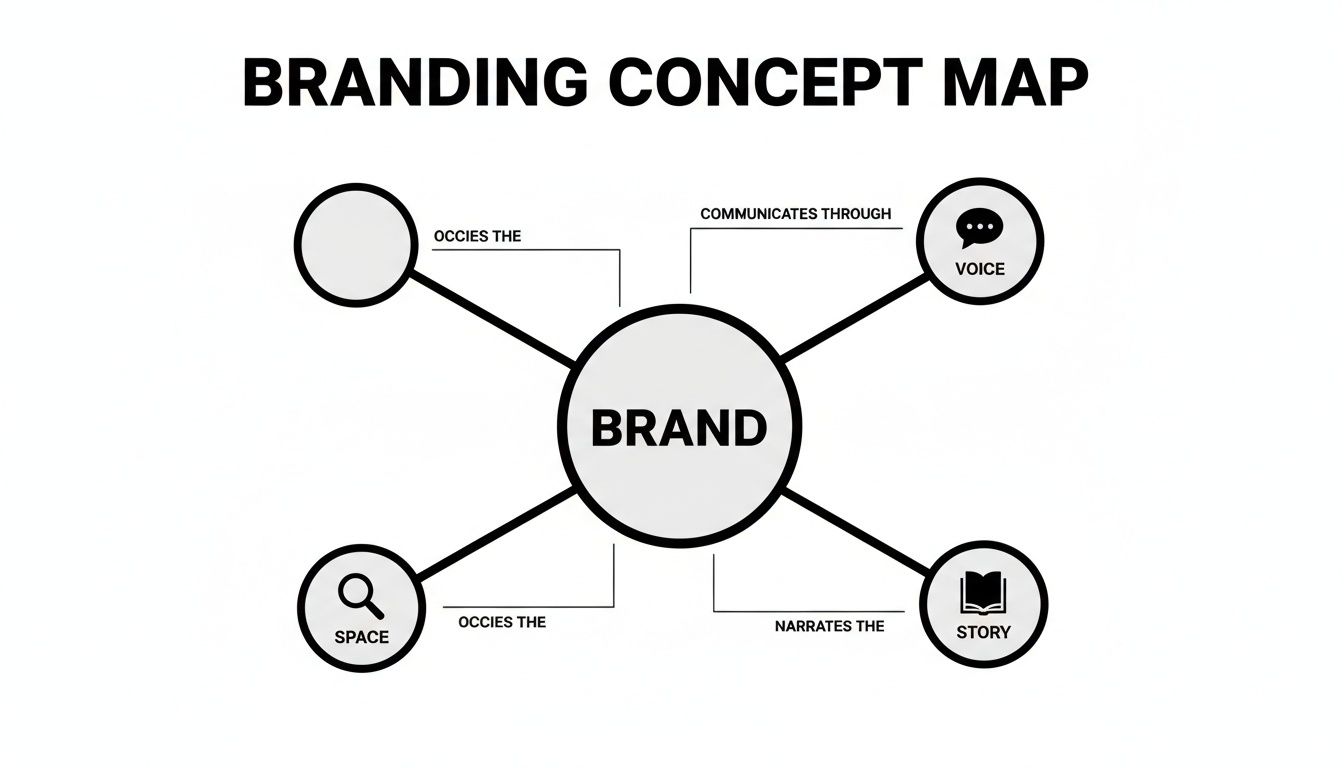
This is about more than just selling equipment; it's about becoming a trusted advisor.
How to Uncover High-Value Pillars
So, where do you find these pillars? You listen. You use keyword research tools like Ahrefs or Semrush to eavesdrop on the digital conversations your customers are already having.
Start by mapping out the biggest challenges restaurant owners face. From my experience, they usually fall into a few key buckets:
- Operational Efficiency: How do I make my kitchen faster and more profitable?
- Maintenance & Longevity: How do I keep my expensive equipment from breaking down?
- Menu Expansion: What equipment do I need to add that new, popular dish?
- Safety & Compliance: How do I make sure I’m up to code and keeping my staff safe?
Each one of those pain points is a potential content pillar. Let’s take "Operational Efficiency." That single pillar could spawn dozens of specific content ideas, from articles on "Choosing Energy Star Certified Refrigeration" to videos comparing "Combi Oven vs. Convection Oven Cook Times."
The goal is simple: become the best, most helpful teacher in your niche. When you answer every question a potential customer has, you build the kind of trust that leads directly to a sale.
Turning Pillars Into a Real Content Plan
Once you’ve identified 3 to 5 core pillars, you can start building out your content calendar. The strategy here is to create a "topic cluster"—a collection of related articles, guides, and videos all linking back to a central pillar page. This approach is incredibly powerful for SEO.
The data doesn't lie. For B2B companies, SEO-driven content strategies can deliver a staggering 748% ROI, blowing paid channels out of the water. By building deep expertise around your pillars, you’re signaling to Google that you are the authority.
The table below shows how this works in practice, breaking down broad pillars into the kind of specific, searchable topics that attract qualified buyers.
Sample Content Pillars for a Restaurant Equipment Supplier
| Content Pillar (Broad Topic) | High-Intent Keyword Examples | Potential Content Titles |
|---|---|---|
| Kitchen Efficiency & Workflow | "small commercial kitchen layout ideas", "how to improve kitchen ticket times", "restaurant kitchen ergonomics" | 5 Space-Saving Layouts for Ghost Kitchens |
| Equipment Maintenance & Repair | "commercial refrigerator maintenance checklist", "how to clean a deep fryer", "common walk-in cooler problems" | The Ultimate Weekly Checklist for Commercial Fryer Care |
| Food Cost & Waste Reduction | "how to reduce food waste in a restaurant", "commercial vacuum sealer for food prep", "blast chiller benefits" | How a Blast Chiller Can Cut Your Food Waste by 20% |
| Energy Efficiency & Sustainability | "energy star commercial appliances", "induction vs gas cooktop cost", "restaurant water saving tips" | Are Induction Cooktops Worth the Investment? A Cost-Benefit Analysis |
| Menu Innovation & Versatility | "what is a combi oven used for", "sous vide for commercial kitchen", "best commercial pizza oven" | 3 Unexpected Menu Items You Can Add With a Combi Oven |
This structured approach transforms your content from a series of one-off blog posts into a strategic asset. To get this right, you need a rock-solid keyword foundation. You can learn exactly how we do it in our guide on how to build a keyword list. This process ensures your marketing engine is always working, attracting high-intent buyers around the clock.
Creating SEO Content That Solves Real Problems
Now that you've got your content pillars locked in, it's time for the fun part: moving from strategy to creation. This is where we start building content that your audience—the chefs, procurement managers, and kitchen designers you want to reach—will actually find valuable. This isn't about just churning out blog posts to fill a calendar; it's about solving the real, tangible problems that keep your customers up at night.
The secret to great content marketing and branding in the foodservice industry is simple: be useful. Your audience is incredibly busy and deeply practical. They're not looking for fluff; they're looking for answers. They need to know which fryer will recover its temperature the fastest during a chaotic dinner rush or exactly how to descale a combi oven to dodge a cripplingly expensive service call. Your content has to deliver those answers, clearly and with authority.
Crafting High-Impact Content Formats
Let's be clear: not all content formats are created equal. When you're selling to restaurants, some types of content just work better because they perfectly align with how a buyer thinks and researches. These are your workhorses.
I recommend focusing your energy on these three content types right out of the gate:
- In-Depth Equipment Comparison Guides: Think of these as powerful decision-making tools. Create detailed, unbiased showdowns like "Deck Ovens vs. Conveyor Ovens for Pizzerias." Get into the weeds on throughput, energy usage, kitchen footprint, and maintenance needs. Using simple tables to compare specs is a game-changer here, making the information easy to scan.
- Detailed 'How-To' Maintenance Articles: This is how you build serious trust. A step-by-step guide titled "Your Weekly Commercial Ice Machine Cleaning Checklist" proves you're a partner invested in your customer's long-term success, not just someone trying to make a sale. Don't be afraid to include clear photos or even short video clips for each step.
- Compelling Client Case Studies: Nothing sells like social proof. A case study titled "How a Ghost Kitchen Boosted Throughput by 30% with a High-Speed Oven" is infinitely more persuasive than a dry product description. Get real data and, most importantly, real quotes from the client to make it authentic.
Each of these formats hits a different point in a buyer's journey, from early-stage consideration to the final decision. By creating a solid mix, you'll have a helpful resource ready for prospects no matter where they are in the process.
Weaving in Smart SEO Practices
Awesome content is useless if no one can find it. SEO isn’t something you sprinkle on at the end; it has to be baked into your writing process from the very first word. The goal is to optimize for both search engines and human readers.
Start with your headings. Structure your content logically (H2, H3, H4) so it creates a scannable outline. For example, in a comparison guide, you might use H3s like "Performance and Speed," "Energy Consumption," and "Ideal Kitchen Environment." This simple trick helps readers jump to the section they care about most and tells Google what your article is all about.
The most effective SEO strategy I've seen is just being genuinely helpful. When you focus on creating the single best, most comprehensive resource on the internet for a specific problem—like "troubleshooting a walk-in cooler"—you naturally start attracting backlinks and earning top rankings.
Next, you need to weave long-tail keywords into your writing naturally. If your main keyword is "commercial convection oven," your article should also include phrases people actually search for, like "best oven for a small bakery," "convection oven fan speed settings," and "how to prevent hot spots in a convection oven." These hyper-specific phrases attract high-intent traffic from buyers who are much closer to making a purchase.
Finally, write meta descriptions that actually earn the click. Don't just stuff them with keywords. Ask a question or state a clear benefit. A meta description like, "Choosing a fryer? Our guide compares the top 5 models on oil life, recovery time, and cleaning difficulty to help you find the perfect fit" is so much more compelling than a generic list of product features.
Smart Distribution and Industry Link-Building
Let's be honest: creating a brilliant, problem-solving piece of content is only half the job. You could write the most insightful guide to combi ovens ever, but it’s completely useless if the busy restaurant owner or procurement manager you’re targeting never sees it.
This is where a smart, proactive distribution strategy makes all the difference. It’s what separates a real content marketing engine from a simple publishing calendar. You can't just hit 'publish' and hope for the best. You have to take your content directly to the digital spaces where your audience already hangs out.
Think about it. A detailed comparison of commercial mixers isn't just for your company blog; it belongs in LinkedIn groups for executive chefs and bakery owners. A guide to walk-in cooler maintenance could be an absolute lifesaver for someone in an online forum for restaurant facility managers. Go to them.

Building the Backlinks That Build Your Authority
Beyond just sharing your content, the real SEO power comes from link-building. Every time a reputable, industry-relevant website links back to your content, it’s like a vote of confidence in Google's eyes. It tells the search engine that your brand is a genuine authority.
These backlinks are one of the most critical factors in determining how high your site ranks in search results.
But you can’t just sit back and wait for these links to appear. You have to be strategic and actively pursue them. This isn’t about sending spammy emails; it’s about building genuine relationships.
Here are a few tactics that actually work:
- Partner Up: Find non-competing businesses that serve the same audience, like a commercial kitchen design firm or a food distributor. Offer to co-create a guide on designing an energy-efficient kitchen. You both contribute your expertise and link back to each other. It's a win-win.
- Make Data Visual: Could you turn industry data into a compelling infographic on kitchen safety trends or the ROI of Energy Star-certified equipment? Visuals are incredibly shareable and naturally attract links from industry blogs and news sites.
- Get Personal with Outreach: When you publish a cornerstone piece of content—say, the definitive guide to commercial refrigeration—do some homework. Identify a handful of influential industry bloggers or journalists who’ve covered similar topics. Send them a personalized email (not a template!) explaining why your resource would be valuable to their audience.
The secret to effective link-building is simple: create content so genuinely useful that other industry experts want to share it. It all starts with providing undeniable value.
This focused approach is what puts your SEO efforts into overdrive. It transforms your content from a lone asset into a recognized industry resource. While top-tier content is the foundation, building this network of authoritative links is what truly cements your brand’s visibility and drives long-term organic growth.
For a deeper dive, check out our guide on strategic link building specifically for the equipment industry.
Measuring What Matters to Grow Your Business
Creating great content feels good, but you can’t run a business on feelings. To really justify the time and money you're investing, you have to prove that your content marketing and branding efforts are actually moving the needle. It's all about shifting your focus away from "feel-good" numbers and zeroing in on the metrics that directly impact your bottom line.
So many suppliers get caught up in vanity metrics—things like total page views or how many likes a post got on social media. While those numbers aren't totally useless, they don't tell you if your content is bringing in qualified buyers or helping your sales team close deals. The real win is tracking Key Performance Indicators (KPIs) that connect what you publish to actual business goals.
Your objective is to turn content from a creative "nice-to-have" into a predictable engine for growth.
Focusing on Business-Critical KPIs
To measure what truly matters, you need to follow the trail from a piece of content all the way to a customer’s journey. This is how you draw a clear line from a blog post to a purchase order.
Here are the KPIs I’d be obsessing over if I were in your shoes:
- Organic Traffic to Key Product Pages: This tells you if your informational content is doing its job and guiding interested readers to the pages where they can actually buy something.
- Keyword Ranking Improvements: Are you climbing the search results for high-intent terms like "heavy-duty commercial mixer" or "energy-efficient walk-in freezer"? This is a direct signal of your growing authority and visibility.
- Qualified Leads Generated: This is the big one. How many people reading your content went on to download a spec sheet, request a quote, or sign up for a product demo?
- Content-Assisted Conversions: With the right analytics setup, you can see how many customers read a blog post or watched a video at some point before they eventually made a purchase. This proves your content is nurturing leads over time.
Shifting your focus from "how many people saw our content?" to "how did our content influence a sale?" is the single most important mindset change you can make. It transforms your marketing from a cost center into a revenue driver.
The table below breaks down the difference between metrics that just look good on a report and those that genuinely drive your business forward. It's a simple gut check to make sure you're tracking what counts.
Key Content Marketing KPIs vs. Vanity Metrics
| Business-Critical KPI | What It Measures | Corresponding Vanity Metric |
|---|---|---|
| Leads from Gated Content | The number of potential customers willing to exchange their contact info for your expertise (e.g., a buyer's guide). | Total Downloads |
| Keyword Rankings for "Money" Terms | Your visibility for search terms that indicate a strong intent to buy equipment. | Overall Website Traffic |
| Conversion Rate on Blog CTAs | The percentage of readers who take a specific action, like requesting a quote from an article. | Blog Page Views |
| Customer Lifetime Value (CLV) | The long-term revenue generated from customers who were initially acquired through your content efforts. | Social Media Followers |
Focusing on the left column ensures your content strategy is directly tied to financial outcomes, not just surface-level activity.
Building a Scalable Content Workflow
Once you start seeing results, the next challenge is producing high-quality content consistently without burning out your team. This is where a repeatable system—an editorial calendar and a clear workflow—becomes your best friend.
You don't need anything fancy. A simple spreadsheet or a project management tool like Asana can work wonders. Map out your content ideas for the next quarter, making sure every piece aligns with one of your core content pillars.
From there, assign clear roles for each step: writing, editing, SEO optimization, and promotion. It doesn't matter if it's an in-house team or a group of freelancers; what matters is that everyone knows their part. This operational approach is what turns random acts of content into a steady, reliable stream that fuels your sales pipeline.
For a deeper dive into how your brand is performing against competitors, you might even look into specialized tools. For instance, some companies use AI brand tracking for SaaS companies to get a real-time pulse on their market position and make smarter, data-driven decisions.
Common Questions on Content and Branding
Even with the best playbook in hand, a few practical questions always come up. In the cutthroat world of restaurant equipment, getting these answers right can be the difference between a strategy that fizzles out and one that turns into a lead-generating powerhouse.
Let's tackle some of the most common hurdles suppliers face when they get serious about content.
How Long Until Content Marketing Actually Shows Results?
This is always the first question, and the honest answer is: it takes patience. While you might see a few small glimmers of hope early on, a real content marketing and branding strategy is a long game, not a quick fix.
You should realistically expect to wait 6 to 12 months before you see a significant, measurable impact on your organic traffic and lead flow. Those initial months are all about laying the groundwork—digging into keyword research, building out your foundational content pillars, and getting all your technical SEO ducks in a row.
Think of it this way: paid ads vanish the second you stop feeding them money. The content you create is a permanent asset. A truly great guide to choosing a commercial oven will keep pulling in qualified buyers and generating leads for years, compounding your initial effort over time.
The secret ingredient here is consistency. As you publish and promote genuinely helpful content on a regular schedule, you build authority in the eyes of Google. That authority leads to better rankings and, ultimately, more visibility.
Technical SEO or High-Quality Content: Which Comes First?
I see this debate pop up all the time. Should you pour your resources into the technical side of your website or into creating amazing content? The truth is, they're two sides of the same coin. For real success, you absolutely need both.
A technically healthy website—one that’s fast, mobile-friendly, and secure—is the non-negotiable foundation. It’s what lets search engines crawl and index your pages without hitting roadblocks.
But a perfect technical foundation is useless without something to put on it. You can have the fastest site on the internet, but if your content is shallow, vague, or just plain unhelpful, you have nothing for search engines to rank.
For restaurant equipment suppliers, my advice is to approach it in this order:
- First, shore up the foundation. Get your site’s technical health in order. Fix any glaring errors that could hold your content back before you even start.
- Then, create relentlessly. Once your site is stable, shift your focus to creating the most detailed, helpful, and expert-driven content in your niche.
Can I Just Use AI to Write All My Content?
AI tools can be a fantastic co-pilot for brainstorming, outlining, and even churning out first drafts. But relying on them to do all the work? That's a mistake.
In a B2B industry as specialized as restaurant equipment, your authority is everything. That authority is built on real-world experience and the kind of deep, nuanced knowledge that AI simply can't fake. Your customers can spot fluff a mile away.
Here’s the smart way to use it:
- Let an AI tool like ChatGPT generate a topic cluster or a rough outline for a blog post.
- Have it pull some initial research or rephrase a clunky paragraph.
- Then, a human expert must step in. They need to fact-check every claim, add unique insights from their own experience, inject your brand's personality, and share real stories that resonate with a professional chef or restaurant owner.
This hybrid approach lets you work faster and more efficiently without sacrificing the accuracy and trust that your audience demands.
At Restaurant Equipment SEO, we build these powerful, expert-driven content strategies that turn your website into a reliable lead-generation engine. Find out how we do it.